
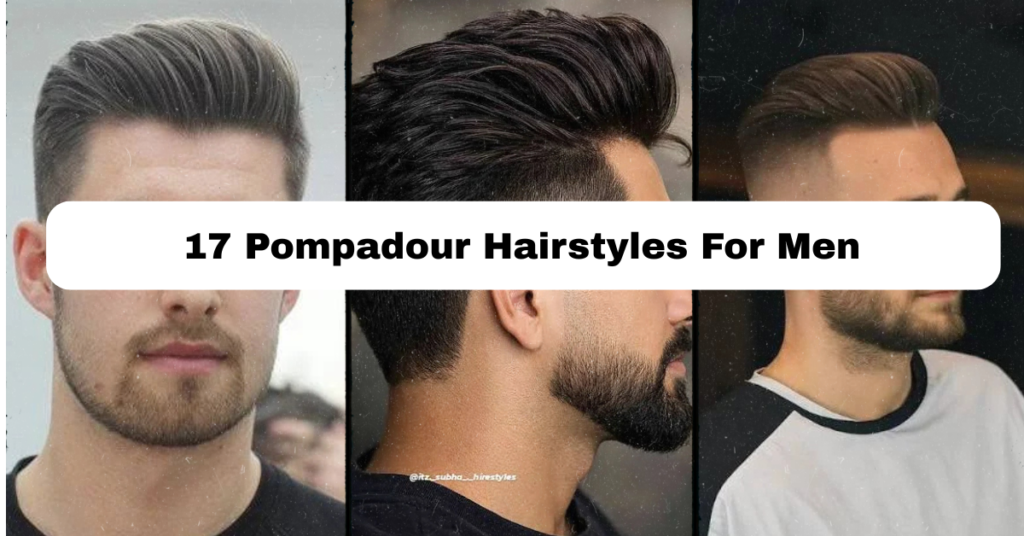
For many years, pompadours have been among the most popular men’s hairstyles, and that is because they balance classic looks and bold styles perfectly well. I’ve done many consultations in my barber shop, and I know precisely how each style works, how to create it, and who should not wear it. Let me show you the best styles, tell you about techniques for creating them, and discuss those elements that make the cut perfect rather than outdated.
What are the best pompadour hairstyles for men? Some of them are classic pompadour, textured pompadour, pompadour fade, and modern disconnected pompadour. All of them have one thing in common – short sides combined with high volume on the top that is styled backwards.
Read on because I will tell you about the most common pompadour hairstyle mistakes and provide you with a detailed maintenance plan to keep your hairstyle always neat.
What Actually Makes a Pompadour a Pompadour
Every pompadour shares one core feature: hair on top is left longer than the sides and swept upward and back, creating height at the front that tapers as it moves toward the crown. What changes between variations is how the sides are cut, how much texture sits on top, and how sharp or soft the transition looks. Face shape plays a bigger role here than most guides mention. Round faces usually benefit from more height to elongate the face, while longer faces often look better with a slightly lower, wider pompadour that doesn’t add extra length. Hair texture matters too, since fine hair typically needs more product and blow-drying technique to hold height, while thick or coarse hair often holds a pompadour shape with far less effort.
1. Classic Pompadour
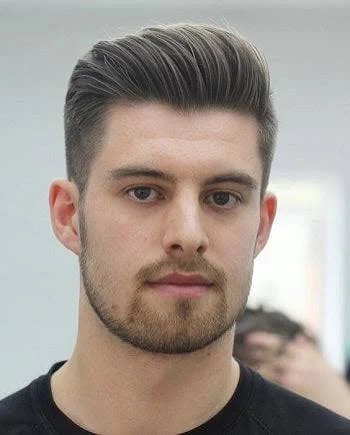
The classic pompadour is the original template every other version on this list builds from. Hair on top is grown out several inches, then swept straight back and up, creating a smooth, rounded wave of height above the forehead. The sides stay relatively short but not shaved, giving a polished, vintage feel rather than a stark contrast. This style suits oval and square face shapes especially well and works for formal settings just as easily as casual wear.
A practical tip: blow-dry hair while brushing it backward and slightly upward at the roots, since this is what actually builds the shape before any product goes in. From this vintage base, let’s look at a version built for modern, low-maintenance wear.
2. Textured Pompadour
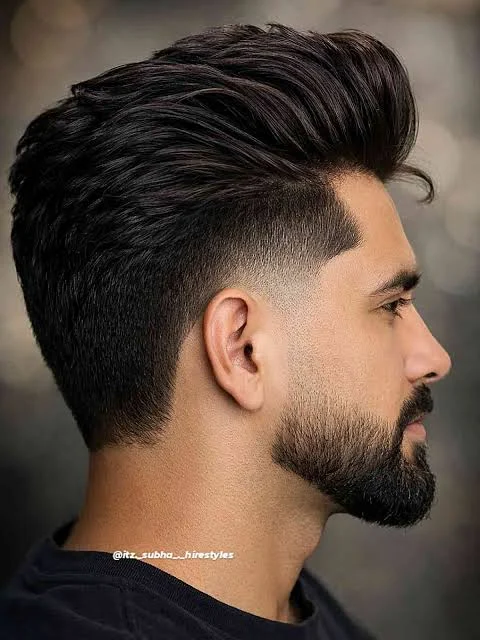
A textured pompadour swaps the smooth, glossy finish of the classic version for a choppier, more piecey look on top. Instead of one solid wave of hair, texture creates separated strands that catch light differently and give a more relaxed, contemporary feel. This works particularly well for thick or wavy hair types, since natural texture does a lot of the styling work already. It suits nearly every face shape and flatters both casual and business-casual settings.
A helpful tip: use a matte paste rather than a glossy pomade for this version, since matte products build texture without adding unwanted shine. Let’s move next to a version that pairs this top with dramatically shorter sides.
3. Pompadour Fade
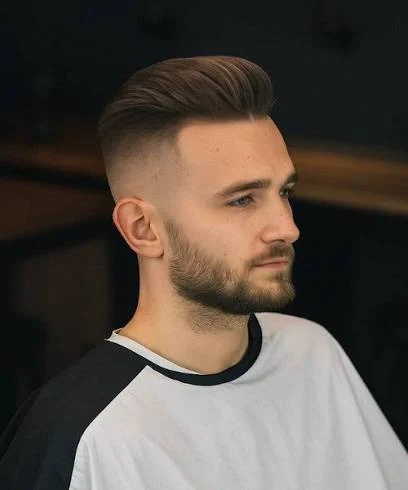
Pairing a pompadour with a fade on the sides, meaning hair gradually shortens down to the skin near the ears and neckline, creates sharp contrast between the voluminous top and the clean, tight sides. This combination has become one of the most requested barbershop looks in recent years, since the fade keeps the overall style feeling modern rather than dated. It suits every face shape and works especially well for men wanting a sharp, professional look with a bit of edge.
A tip worth remembering: request a “mid fade” rather than a high fade if you have a rounder face, since a high fade paired with a tall pompadour can make a round face look even shorter. Now, let’s look at a version with even more dramatic side contrast.
4. Disconnected Pompadour
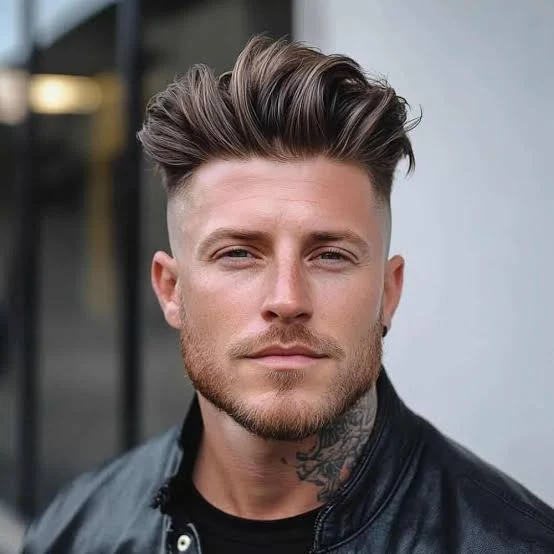
A disconnected pompadour takes the fade concept further, creating a sharp, visible line between the long top and the much shorter or shaved sides, rather than a gradual blend. This creates a bold, high-contrast look that reads as edgier and more fashion-forward than a traditional blended fade. It suits square and oval face shapes particularly well and works for anyone wanting a statement look rather than something subtle.
A practical tip: this style requires more frequent trims than a blended fade, since the sharp disconnection line grows out and softens faster than a gradual taper. From bold contrast, let’s shift to a slicked, retro-inspired variation.
5. Slicked-Back Pompadour
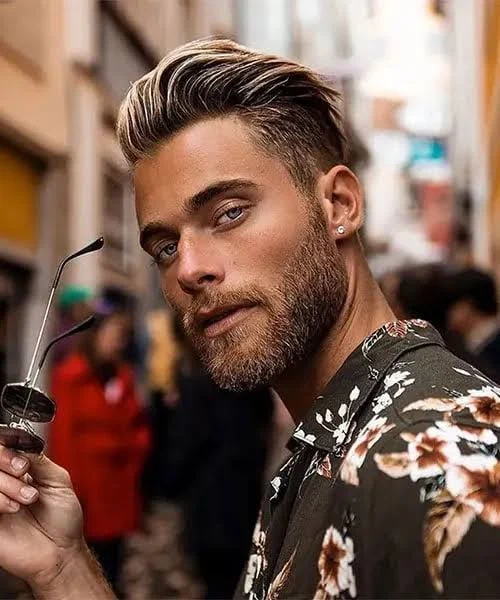
A slicked-back pompadour uses a strong-hold, high-shine pomade to create a smooth, reflective finish rather than the more textured or matte looks covered so far. Hair is combed straight back from the forehead with minimal parting, creating a sleek, uniform silhouette. This style suits oval and long face shapes especially well and reads as formal, making it a strong choice for weddings or business settings.
A tip that matters here: apply pomade to slightly damp, not wet, hair for the smoothest possible finish, since fully soaked hair dilutes the product’s hold. Let’s move now to a version built around a soft, rounded quiff-like top.
6. Pompadour Quiff Hybrid
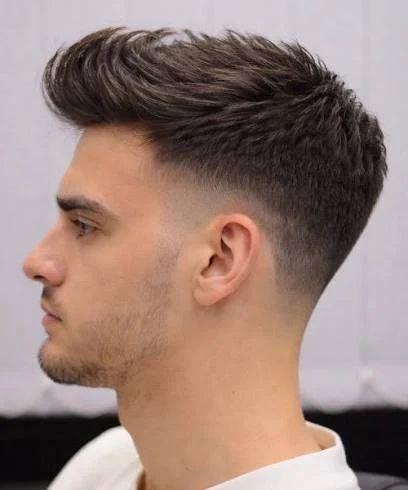
Blending a pompadour with a quiff creates a softer, more rounded shape at the front rather than the sharp, structured wave of a traditional pompadour. This hybrid style tends to look more relaxed and versatile, working for both casual weekends and smart-casual office settings. It suits nearly every face shape since the rounded shape is generally more forgiving than a sharply defined pompadour.
A helpful tip: focus your styling product application at the roots specifically, since a quiff-pompadour hybrid relies more on root lift than length for its overall shape. Next, let’s look at a version specifically built for curly hair textures.
7. Curly Pompadour
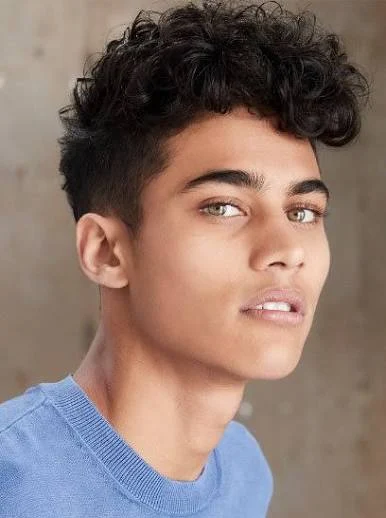
A curly pompadour keeps natural curl pattern intact on top while still creating the signature swept-back height associated with the style. Rather than fighting the curl with heavy styling products, this version works with natural texture, using lighter creams to define curls while still lifting them up and back. This style suits round and oval face shapes especially well and gives a distinctive, textured silhouette that straight-haired pompadours can’t replicate. A tip worth trying: scrunch curl cream upward into roots rather than raking it through, since raking can loosen curl definition before you’ve even started building height. From natural texture, let’s move to a version built around a completely different length balance.
8. Pompadour With Undercut
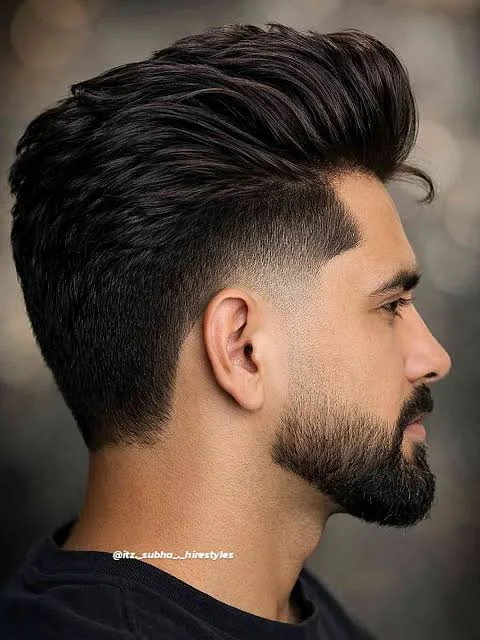
An undercut pairs dramatically shorter, often clipper-cut sides with a much longer, fuller top, creating one of the most striking contrasts on this list. Unlike a fade, which gradually blends length, an undercut typically features a sharp, consistent length change with less gradual tapering. This style suits square and oval face shapes and works particularly well for anyone wanting a bold, editorial-style look. A practical tip: ask your barber for a slight taper at the very bottom of the undercut rather than a completely flat line, since a small taper prevents the cut from looking too harsh as it grows out. Let’s shift now to a shorter, lower-maintenance pompadour variation.
9. Short Pompadour
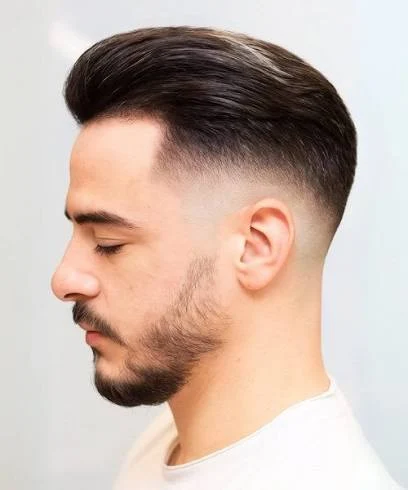
For men who don’t want to commit to significant length on top, a short pompadour creates the signature swept silhouette using just a few inches of length rather than several. This version requires far less daily styling time and holds its shape more easily throughout the day. It suits nearly every face shape and works particularly well for professional environments where a lower-maintenance look is preferred. A tip that helps: use a lightweight styling cream rather than a heavy pomade for this shorter version, since heavier products can weigh down shorter hair and prevent it from lifting properly. Now, let’s look at a version with dramatically more volume and height.
10. High Volume Pompadour
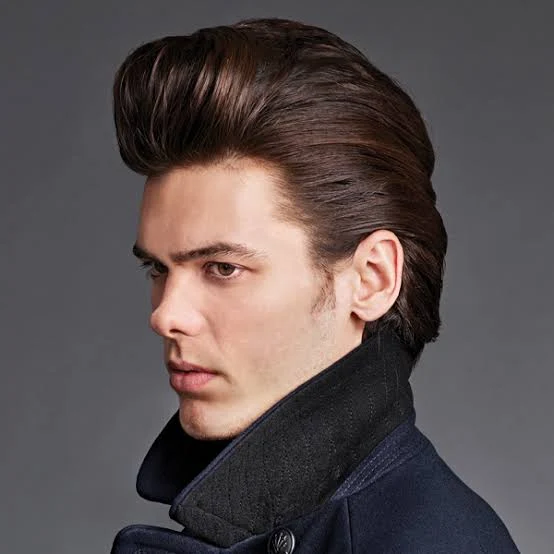
For maximum visual impact, a high volume pompadour pushes height and fullness to the extreme, creating a dramatic, almost architectural silhouette at the front. This version requires longer top length, typically four inches or more, along with strong-hold product and careful blow-drying technique. It suits longer face shapes especially well, since the added height can otherwise exaggerate an already long face if not balanced carefully with the rest of the cut. A helpful tip: use a round brush while blow-drying to build maximum lift at the root before applying any finishing product. Let’s move to a version built around a softer, more natural finish.
11. Messy Pompadour
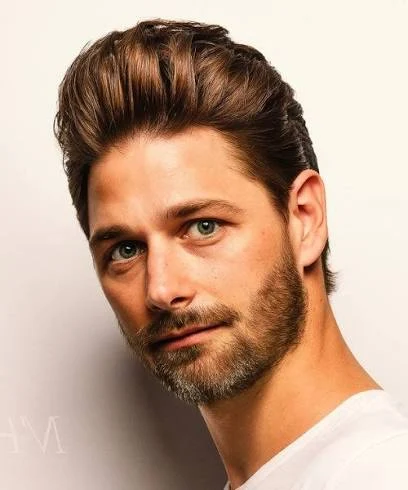
A messy pompadour deliberately avoids the polished, uniform look of a classic version, instead embracing tousled, irregular texture throughout the top. This style works particularly well for casual, everyday wear and suits younger, more relaxed personal styles. It flatters nearly every face shape since the irregular texture naturally softens the overall silhouette. A tip worth remembering: apply a small amount of matte clay and scrunch hair upward with your fingers rather than combing, since combing tends to smooth out the intentional messiness this style relies on. From relaxed texture, let’s move to a version built for special occasions.
12. Formal Pompadour With Side Part
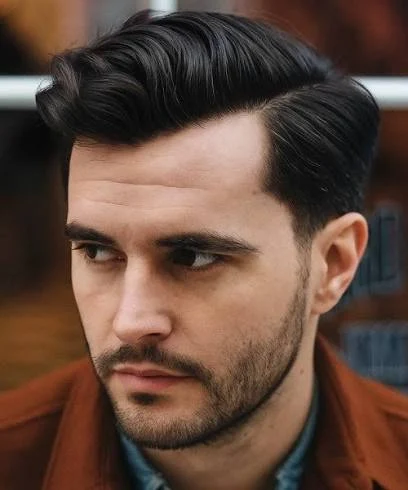
Adding a crisp side part to a classic pompadour creates a more formal, structured look suited for weddings, interviews, or other high-stakes occasions. The side part adds a clean line that contrasts nicely with the swept-back volume on top. This style suits oval and square face shapes particularly well and pairs beautifully with a clean-shaven or well-groomed beard. A practical tip: use a fine-tooth comb to create the part line before styling the rest of the pompadour, since parting after styling can disrupt the height you’ve already built. Let’s shift now to a version with a bolder, more colorful twist.
13. Colored Pompadour
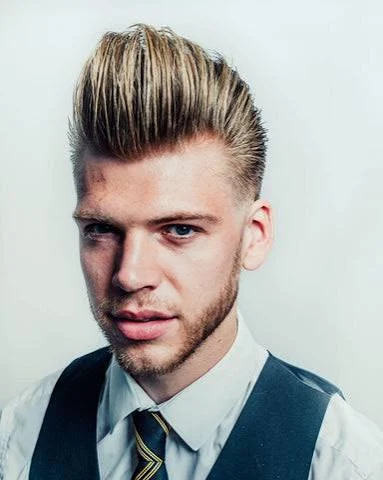
Adding a bold or subtly dimensional color to a pompadour, whether that’s a few lighter highlighted pieces on top or a full color change, creates a distinctive, fashion-forward statement. This works especially well on textured or curly pompadours, since color placement can highlight individual curls or texture patterns. It suits nearly every face shape and works for creative industries or anyone wanting to stand out. A tip that matters: keep color changes concentrated on top rather than the shorter sides, since a lighter or bolder color on top draws the eye upward toward the height and volume of the style. Next, let’s look at a version tailored specifically to thinning hair.
14. Pompadour for Thinning Hair
A pompadour can actually work well for thinning hair, as long as it’s adjusted to rely more on strategic cutting than sheer length for volume. Shorter, layered cutting on top creates the illusion of thickness, while a light-hold texturizing powder adds grip without weighing hair down. This version suits nearly every face shape and gives a polished, intentional look rather than drawing attention to thinning areas. A helpful tip: avoid heavy pomades entirely for this version, since heavy products can make thinning hair look flatter and more see-through rather than fuller. Let’s move to a version popular in more formal, corporate settings.
15. Business Pompadour
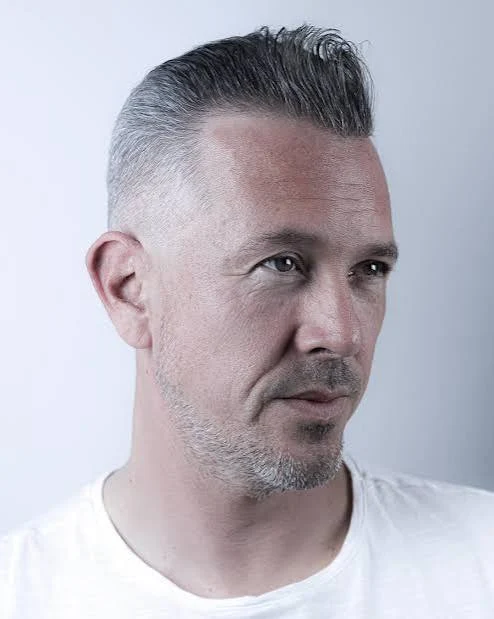
A business pompadour keeps height and volume more conservative than other versions on this list, prioritizing a clean, professional look over dramatic styling. Sides stay short but blended rather than sharply faded, and the top is styled with a moderate amount of height rather than an extreme silhouette. This suits nearly every face shape and works specifically for corporate or client-facing environments. A tip worth trying: use a cream-based product rather than a high-shine gel for this version, since a more matte, natural finish tends to read as more professional in conservative workplace settings. Now, let’s look at a version built for special, high-glamour occasions.
16. Pompadour With Hard Part
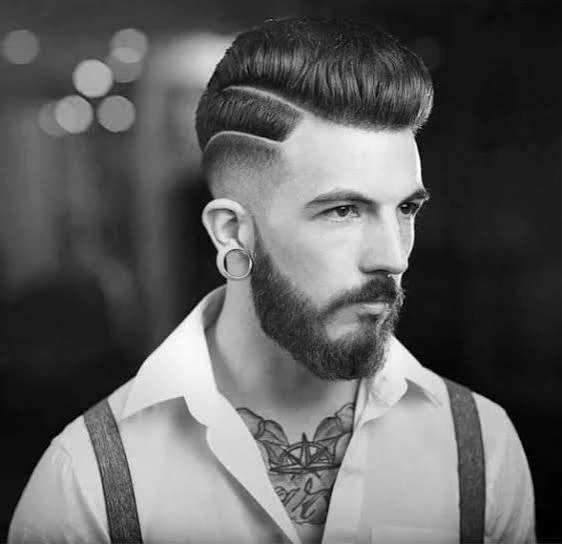
A hard part, a shaved line separating the top section from the sides rather than a comb-created part, adds a sharp, graphic element to a pompadour. This version has become especially popular alongside fades, since the hard part adds definition that complements the crisp, clean sides. It suits square and oval face shapes especially well and gives an edgier, more modern feel than a traditional soft side part. A practical tip: this style requires touch-ups every one to two weeks to keep the shaved line looking crisp, since it grows out and blurs faster than the rest of the cut. Finally, let’s close with a version built around minimal daily effort.
17. Air-Dried Natural Pompadour
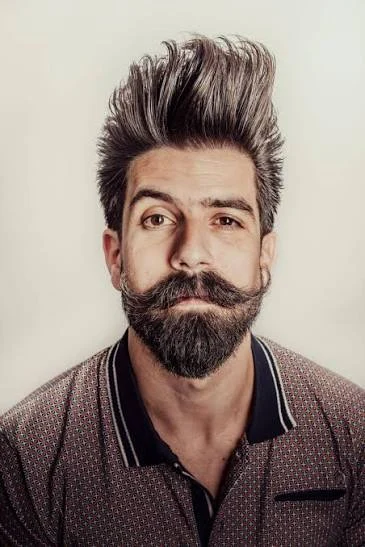
For the lowest-maintenance version on this entire list, an air-dried natural pompadour skips blow-drying and heavy product altogether, relying instead on natural hair texture and a light styling cream applied to damp hair. This version works best for men with naturally wavy or textured hair that already has some built-in volume. It suits nearly every face shape and works well for casual, everyday wear where a polished, structured look isn’t necessary. A tip to remember: comb hair up and back while it’s still damp, then let it dry undisturbed, since touching or restyling partially dried hair usually ruins the natural shape it’s forming on its own.
Pompadour Style Comparison at a Glance
Styling Time and Best Use Case by Variation
| Pompadour Style | Styling Time | Best For | Product Type |
|---|---|---|---|
| Classic Pompadour | 15–20 minutes | Formal, vintage-inspired looks | High-shine pomade |
| Textured Pompadour | 10–15 minutes | Business-casual, everyday wear | Matte paste |
| Pompadour Fade | 15–20 minutes | Professional, modern edge | Medium-hold cream |
| Disconnected Pompadour | 15–20 minutes | Fashion-forward statement looks | Matte clay |
| Slicked-Back Pompadour | 10–15 minutes | Weddings, formal events | High-shine pomade |
| Pompadour Quiff Hybrid | 10–15 minutes | Casual to smart-casual | Lightweight cream |
| Curly Pompadour | 15–20 minutes | Natural curl types | Light curl cream |
| Pompadour With Undercut | 15–20 minutes | Bold, editorial-style looks | Medium-hold pomade |
| Short Pompadour | 5–10 minutes | Low-maintenance professional wear | Lightweight cream |
| High Volume Pompadour | 20–25 minutes | Dramatic, statement styling | Strong-hold pomade |
| Messy Pompadour | 5–10 minutes | Casual, everyday wear | Matte clay |
| Formal Pompadour With Side Part | 15–20 minutes | Weddings, interviews | Medium-hold pomade |
| Colored Pompadour | 10–15 minutes | Creative, fashion-forward looks | Matte paste |
| Pompadour for Thinning Hair | 10 minutes | Thinning or fine hair | Texturizing powder |
| Business Pompadour | 10–15 minutes | Corporate, client-facing roles | Matte cream |
| Pompadour With Hard Part | 15–20 minutes | Edgy, modern fades | Medium-hold pomade |
| Air-Dried Natural Pompadour | 5 minutes (plus dry time) | Low-effort casual wear | Light styling cream |
Common Mistakes and How to Avoid Them
Skipping heat protectant during blow-drying : Repeated blow-drying without heat protection dries out hair over time, especially on top where most of the styling effort happens. Apply a lightweight heat protectant spray before every blow-dry session.
Using too much product at once : Overloading hair with pomade or paste can weigh down height and create a greasy, flat look instead of the intended volume. Start with a small amount and build up gradually rather than applying it all at once.
Choosing a pompadour height that ignores face shape : A very tall pompadour on an already long face, or a very short one on a round face, can throw off facial proportions. Discuss your specific face shape with your barber before deciding on height and volume.
Letting sides grow out too long between trims : A pompadour depends heavily on contrast between the top and sides, and overgrown sides blur that contrast fast. Schedule trims every two to four weeks depending on how sharp you want the style to stay.
Combing a “messy” pompadour after applying product : Combing through a deliberately textured or messy style smooths it out and defeats the entire look. Use fingers to style texture-focused pompadours instead of a comb.
Ignoring hair type when choosing a technique : Applying heavy, glossy product to fine hair, or trying to slick down thick, coarse hair without enough hold, both lead to disappointing results. Match your product choice and technique to your actual hair type, not just the style in a reference photo.
Similar Variations Worth Trying
- Pompadour mohawk hybrid: combines dramatic height with tapered, mohawk-style sides for an edgier statement.
- Low pompadour with soft fringe: reduces overall height while adding a light, face-framing fringe at the front.
- Pompadour with beard fade: extends the fade concept from the sides into a well-groomed, gradually shortened beard.
- Vintage pompadour with finger waves: adds a retro wave pattern on top for a distinctly 1950s-inspired look.
- Asymmetrical pompadour: shifts height and volume slightly off-center for a modern, editorial twist.
Hair Care Tips for Pompadour Hairstyles For Men
- Wash hair with a clarifying shampoo weekly to remove pomade or paste buildup that can weigh down volume over time.
- Use a lightweight conditioner on the top section specifically, since heavier conditioners can reduce the natural lift needed for height.
- Get trims every two to four weeks to maintain sharp contrast between the top and sides.
- Apply heat protectant before every blow-dry to prevent dryness and breakage from repeated styling.
- Store pomades and clays with lids tightly closed, since exposure to air can dry out and change the texture of styling products over time.
- Brush or comb hair gently when detangling, saving firmer styling tools for the actual shaping process rather than everyday detangling.
Final Thoughts
Trying out these pompadour hairstyles for men really comes down to matching height, texture, and side treatment to your specific face shape and hair type, whether that’s a dramatic high-volume pompadour or a low-maintenance air-dried version. Every style on this list uses that same core principle of contrast between length on top and shorter sides, just executed in a slightly different way each time.
Start with whichever version fits your current hair length and daily routine, whether that’s a five-minute messy pompadour or a full styling session for a formal event. Whichever direction you choose, these pompadour hairstyles for men prove that one classic concept can flex into dozens of completely different looks depending on how you build it.