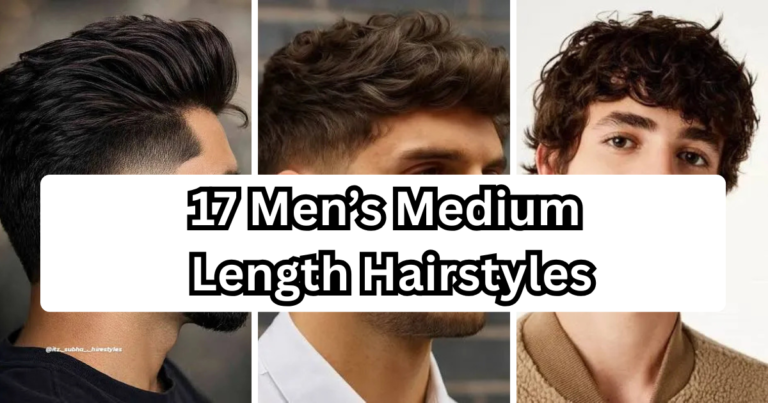

Medium length hairstyles for men are everywhere right now, and I’ve spent hours digging through barbershop trends, celebrity cuts, and stylist advice to build the one list I wish existed when I was growing my own hair out. This isn’t a quick photo dump. Every cut below comes with the details most guides skip: who it actually suits, how to ask for it, and how to keep it looking sharp between visits.
So what are the best medium length hairstyles for men? Medium length sits between 2 and 6 inches on top. The strongest picks for 2026 are the textured crop, curtain fringe, modern mullet, bro flow, warrior cut, and wolf cut, each suited to different face shapes and hair textures.
Stick around, because I’m also covering the mistakes that ruin a good cut, a face-shape and hair-type comparison table, and a care routine that actually keeps medium hair healthy instead of just longer.
What Actually Counts as “Medium Length” Hair?
Here’s something most articles gloss over. “Medium length” isn’t one fixed measurement. Most barbers treat 2 to 6 inches on top as the medium range, with the sides tapered, faded, or scissor-cut shorter to keep things balanced. Hair on the shorter end of that range (2 to 3 inches) still looks tidy and low effort. Hair on the longer end (5 to 6 inches) can tuck behind your ears and starts to behave more like long hair. Where you land depends on your hair type, your face shape, and honestly, how much time you want to spend in front of a mirror each morning.
One more thing worth knowing before you sit in the chair: hair grows about half an inch a month on average. So if you’re coming from a buzz cut and want real medium length, you’re looking at five or six months of awkward growing-out phase. Curly and coily hair shrinks up as it dries, so it can look shorter than it measures. Keep that in mind when you’re picturing the finished look.
Barbershop Terms You Should Know
Walking into a barbershop without knowing the lingo is how you end up with a haircut you didn’t ask for. Here’s a quick glossary before we get into the cuts themselves.
Taper : A gradual blend from longer hair on top to shorter hair at the sides and back, using scissors, clippers, or both.
Fade : A sharper version of a taper, cut with clippers on different guard settings, usually skin-close at the bottom and blending upward.
Undercut : The sides and back are buzzed very short while the top is left noticeably longer, creating a bold contrast.
Disconnected cut : The top and sides are cut with no gradual blend between them, so there’s a visible line between lengths.
Fringe : The front section of hair that falls over the forehead, also called bangs.
Now that you’ve got the vocabulary down, let’s get into the actual styles.
1. The Textured Crop
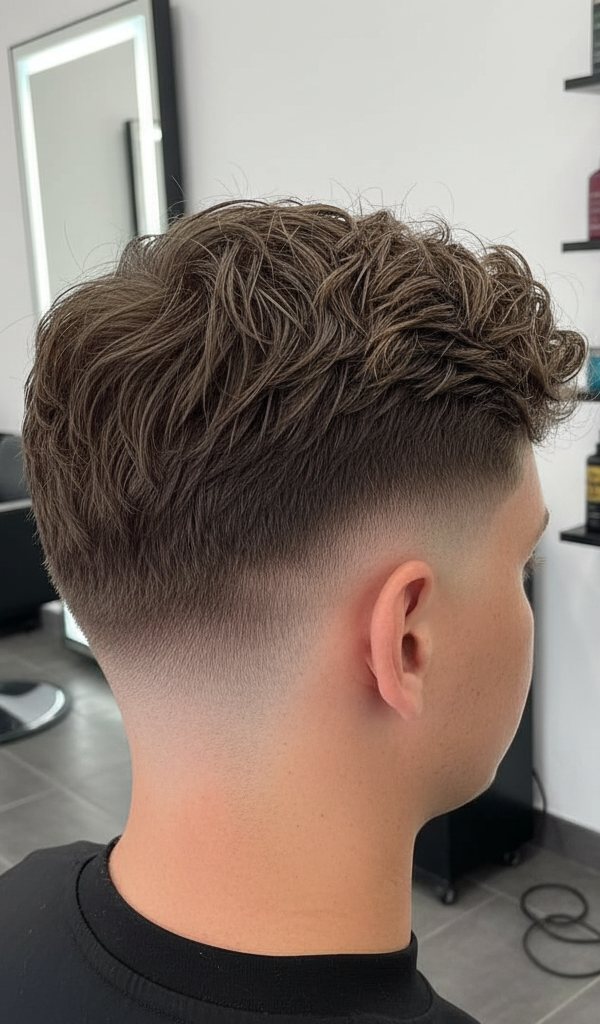
The textured crop earns its spot at the top of this list because it works on nearly any hair type. Short, choppy layers sit on top of the head while the sides taper down cleanly, giving you texture without asking for daily effort. Ask your barber for two to three inches on top with heavy point-cutting to break up the ends, then a low or mid taper on the sides.
To style it, rub a dime-sized amount of matte clay between your palms and scrunch it through damp hair, letting the natural separation do the work. This cut flatters oval, square, and heart-shaped faces especially well, and it holds its shape through straight, wavy, or slightly curly hair. Guys with a professional dress code love it because it reads as neat, not messy. Once you’ve got the texture down, the next logical step up is adding some length at the front for a fringe.
2. Curtain Fringe
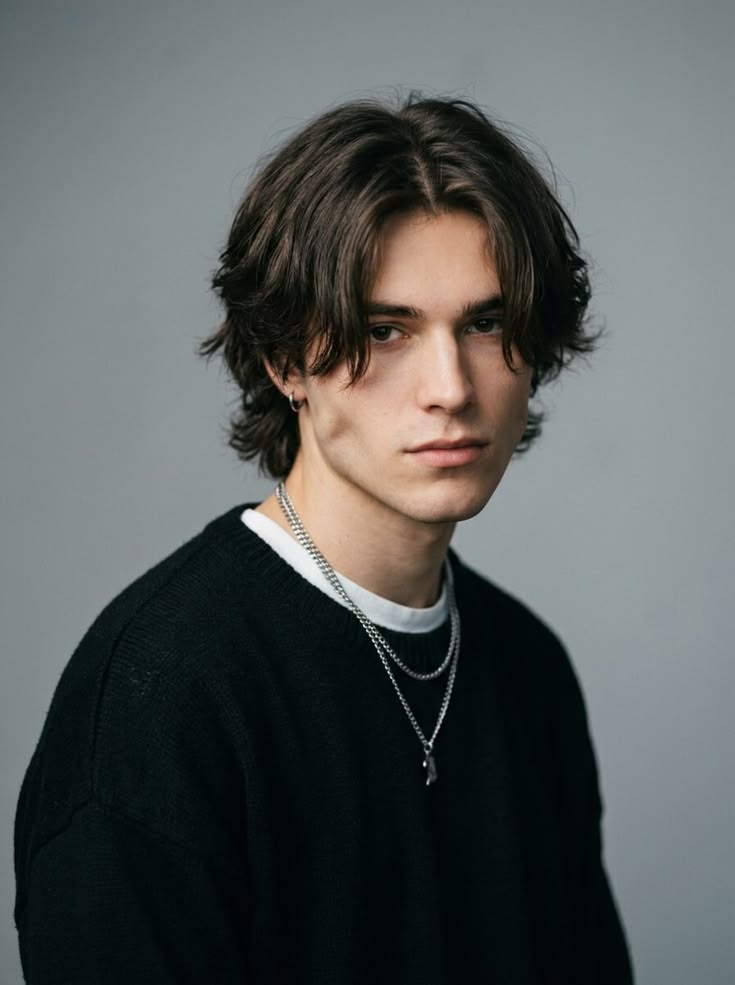
Curtain fringe has been the breakout cut of the last few years, and it isn’t slowing down. The hair on top is grown out to three or four inches, then parted down the middle so it falls in two soft “curtains” framing your face. It’s a flattering, face-softening cut that works especially well if your forehead is on the wider side.
Rub a lightweight texturizing paste into damp hair and let it air-dry so the part falls naturally instead of looking forced. Trim it every five to six weeks to keep the shape from growing shapeless. Curtains suit oval, heart, and longer face shapes best, and they need straight to wavy hair that holds a center part without frizzing out. If your hair is very curly, ask your barber about a modified curtain with looser, shorter layers instead. From here, adding movement through the crown takes you straight into shag territory.
3. The Modern Shag (Mod Cut)
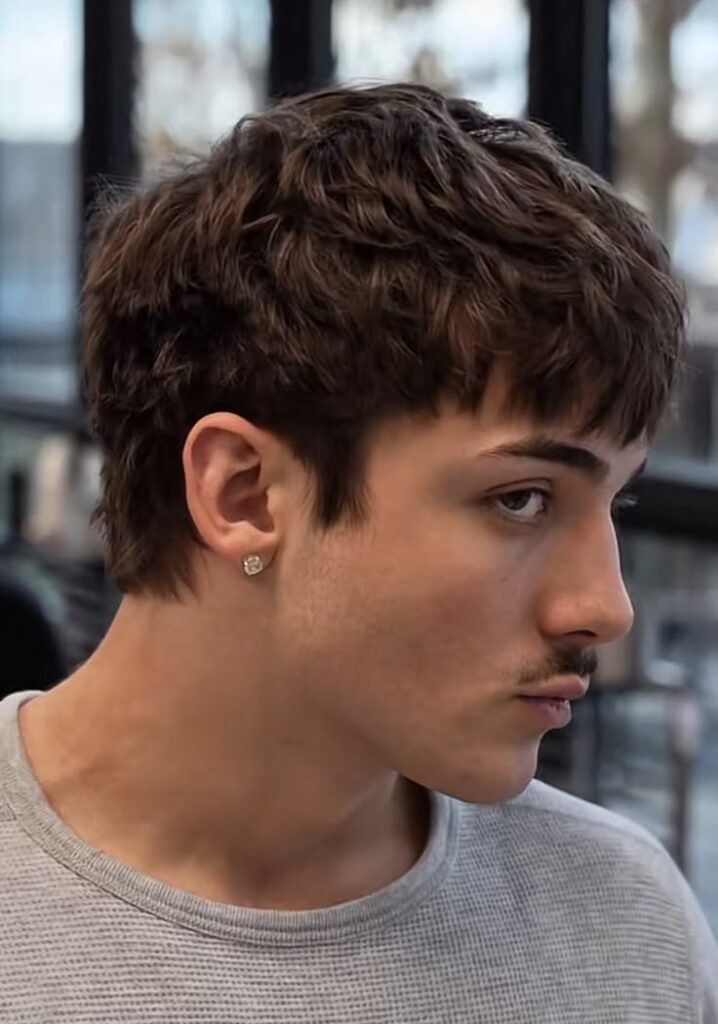
The shag is proof that a genuinely good haircut can look like you rolled out of bed. Heavy layering runs throughout the top and sides, with face-framing pieces left slightly longer at the front. It’s a Britpop-inspired cut, borrowed from the mid-’60s and updated with modern texture techniques.
Because the cut itself does most of the work, styling is simple. Spray a sea salt spray through damp hair for grit, then let it air-dry before finger-styling the layers into place. Book a trim every six to eight weeks so the layers don’t grow out into a shapeless mop. The shag is best suited to wavy or curly hair and flatters oval and diamond faces particularly well, though a skilled barber can adapt the layering to soften a square jaw too. If you like the shag’s movement but want something even lower maintenance, the mullet is the next stop.
4. The Modern Mullet
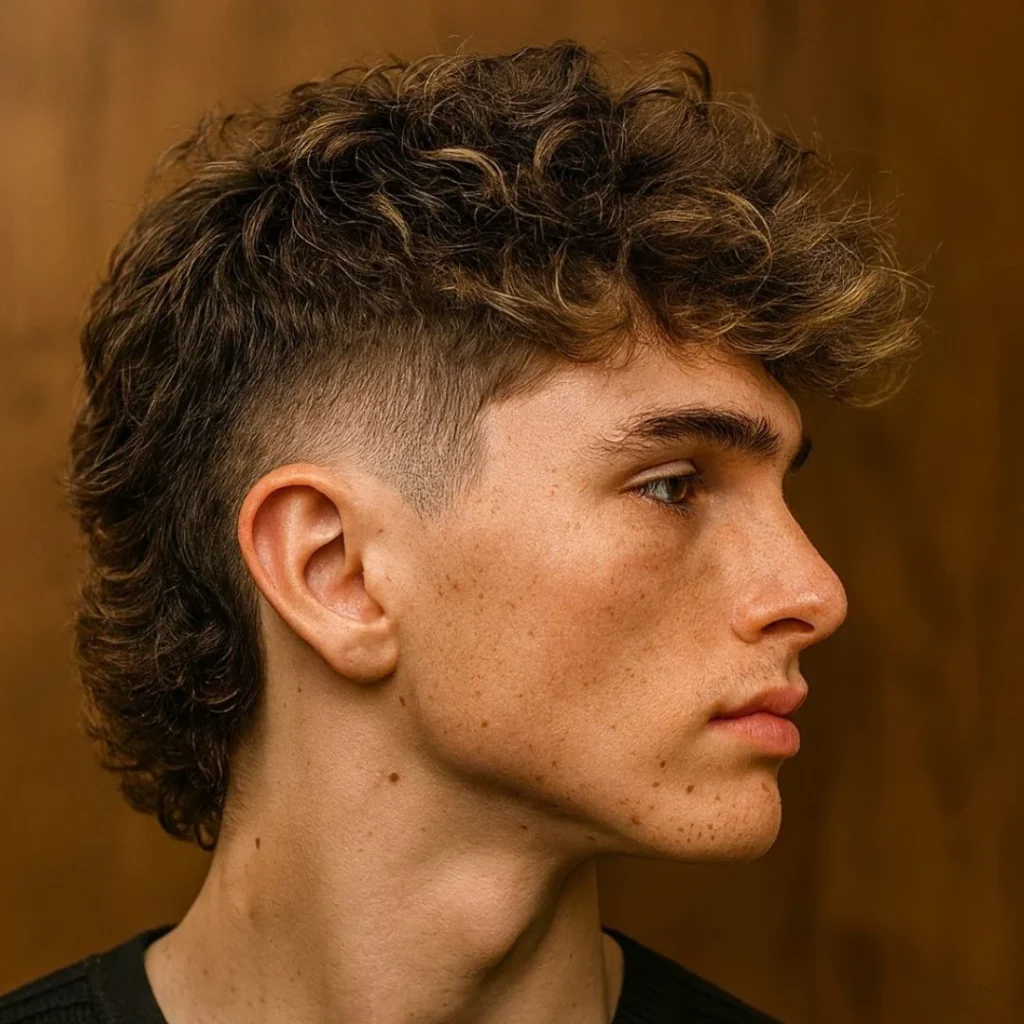
Mullets are officially back, and the 2026 version has almost nothing in common with the version your dad wore in 1985. The sides stay buzzed or tapered short, the top gets three to four inches of textured length, and the back grows out slightly longer without the dramatic length of the original.
Work a lightweight cream through damp hair to keep it soft rather than stiff, and refresh the shape every three to four weeks so it doesn’t drift into shaggy territory. Modern mullets flatter heart and oblong faces especially well, but they can overwhelm a round face, so ask your barber to keep the back shorter if that’s your shape. This cut pairs beautifully with straight or slightly wavy hair. If a mullet feels like too much commitment, the next cut offers a gentler, beach-casual alternative.
5. Bro Flow
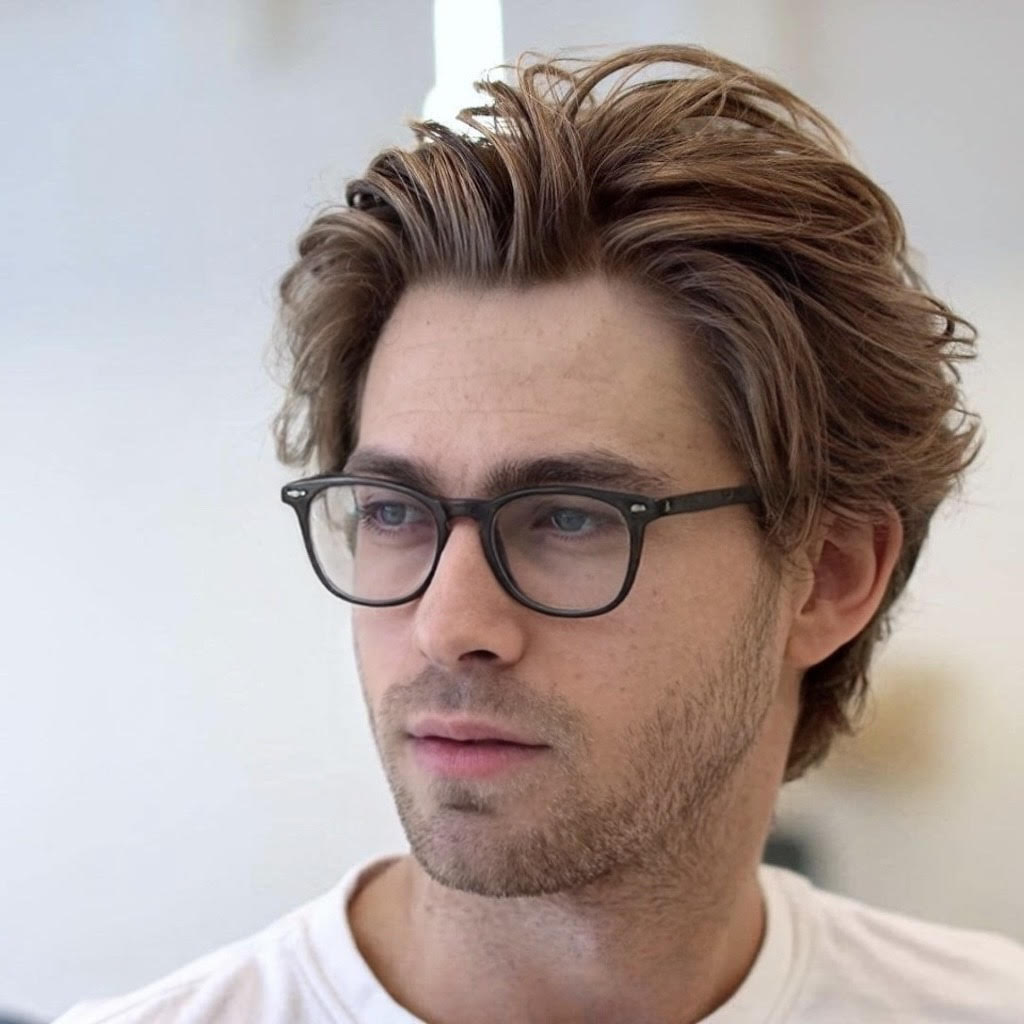
The bro flow is the medium length hairstyle equivalent of a Sunday morning. Hair is pushed straight back off the face, or tucked behind the ears, skimming the collar in soft, undefined layers. There’s no fade required, and no fussy parting. It’s a relaxed, surf-inspired look that somehow manages to look effortless and intentional at once.
Apply a leave-in conditioner to damp hair, then air-dry or use a diffuser to encourage natural wave and body. Skip the comb entirely. Bro flow suits longer and oval faces best and looks its best on wavy or naturally textured hair, since straight hair can look flat without help. It’s also one of the lowest-maintenance cuts on this list, needing a trim only every two to three months. For guys who want that same relaxed energy but with more visible structure up top, the warrior cut is worth a look.
6. Warrior Cut
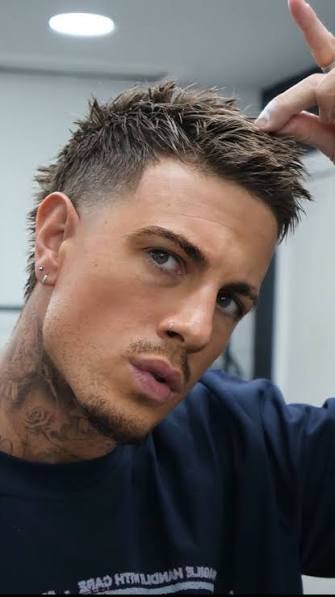
Named for its resemblance to the cut popularized by Brad Pitt, the warrior cut keeps the sides short and tapered while leaving three to four inches of textured length on top for a bold, dramatic silhouette. It’s a confident cut that photographs well and grows out cleanly, which makes it a smart choice if you’re not ready to commit to something permanent.
Work a matte clay into dry or slightly damp hair, then sprinkle a texture powder at the roots for extra separation. The combination gives structure without any greasy shine. This cut flatters strong jawlines especially well; if your face is more oval, ask for a touch more length on top to balance things out. It works across most hair types but looks sharpest on straight to slightly wavy hair. Up next is a cut that takes that same top-heavy silhouette and adds height instead of length.
7. Textured Quiff
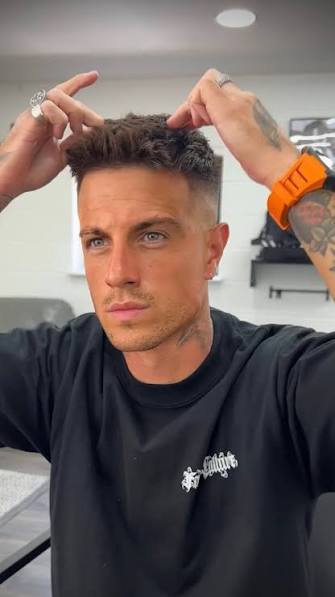
The textured quiff takes the classic pompadour shape and strips out the shine and stiffness. Height builds at the front through a lifted, brushed-back section, creating a vertical line that sharpens the whole face. Ask for three to four inches on top with a strong front section, paired with a mid or high fade on the sides for contrast.
Blow-dry the roots upward using a round brush for lift, then apply a medium-hold pomade to lock the shape in place without weighing it down. This cut is a great option if you have a rounder face, since the added height creates the illusion of length. Straight to wavy hair holds a quiff shape most reliably, and thick hair gives you the most volume to work with. Trims every four weeks keep the silhouette from softening. If a quiff feels too structured for your taste, the modern slick back offers similar height with a more relaxed finish.
8. Modern Slick Back
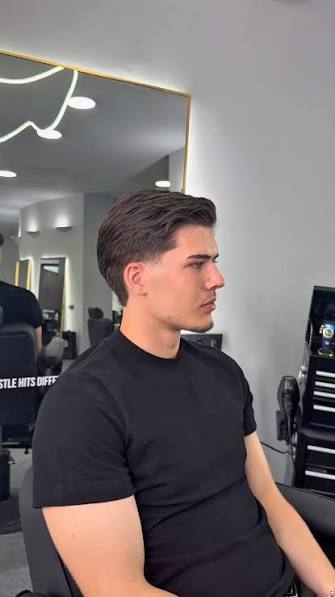
Forget the wet-look, comb-plastered slick back of prom photos. The 2026 version is pushed back with fingers instead of a comb, keeping volume and movement intact rather than flattening everything down. The hairline stays soft and undefined, which reads as confident rather than overly polished.
For thick or wavy hair, work a lightweight styling cream through damp hair before pushing it back with your fingers, focusing on the crown for lift. Fine hair benefits from a pre-styler like a volumizing mousse applied first. This cut suits most face shapes, though it’s especially flattering on square and oval faces. It pairs with a beard nicely for a more rugged finish, or a clean shave for something sharper. Now let’s look at a cut built entirely around embracing imperfection.
9. Messy Medium Layers
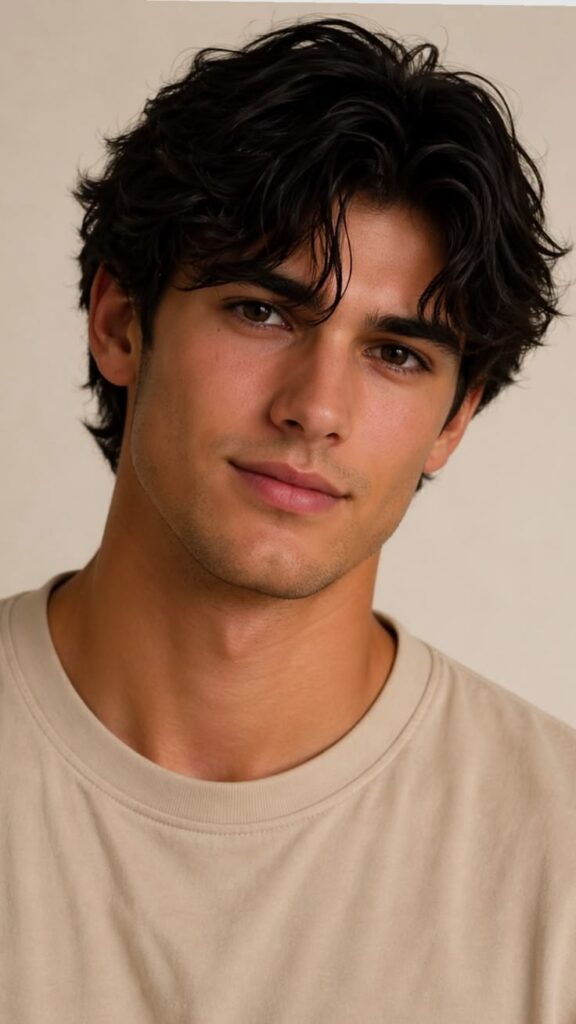
Messy medium layers are the low-stakes, high-reward option on this list. The sides are scissor-cut rather than faded, and three to four inches of layered length sits on top, styled to move naturally instead of holding a fixed shape. There’s no harsh line anywhere in this cut, which is exactly the point.
Spray sea salt onto damp hair for texture, then either air-dry or use a diffuser on low heat before shaping the layers loosely with your fingers. This is one of the most face-shape-forgiving cuts around, working well on oval, square, and heart shapes alike. Wavy and curly hair take to it especially well since the natural texture does most of the styling for you. It’s a smart transitional cut if you’re growing hair out from short to long and want something that looks intentional the whole way through. Speaking of transitional cuts, the wolf cut takes this same idea and pushes it further.
10. Wolf Cut
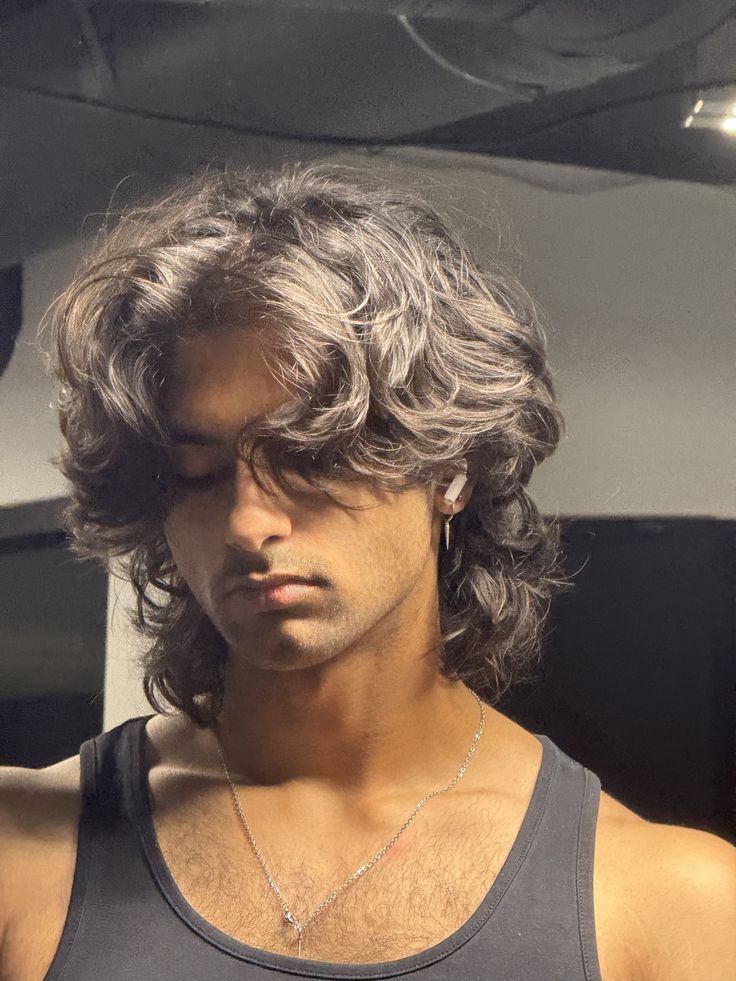
The wolf cut blends the choppy, face-framing layers of a shag with the shorter crown and longer back of a mullet, resulting in a wild, layered shape that’s part rock star, part low-maintenance rebel. Shorter layers build volume at the crown while longer pieces frame the face and extend toward the back.
Use a volumizing mousse on damp hair, blow-dry lightly to build lift at the roots, then finger-style to encourage separation between layers. The wolf cut works beautifully on curly and coily hair, since the natural curl pattern adds even more dimension to the layering. It suits round and square faces particularly well because the crown volume elongates the face. Because there’s so much layering involved, book a trim every six weeks to keep the shape from collapsing into a shapeless mess. If you have a receding hairline and worry the wolf cut’s face-framing pieces might draw attention to it, the French crop below is a smarter pick.
11. French Crop
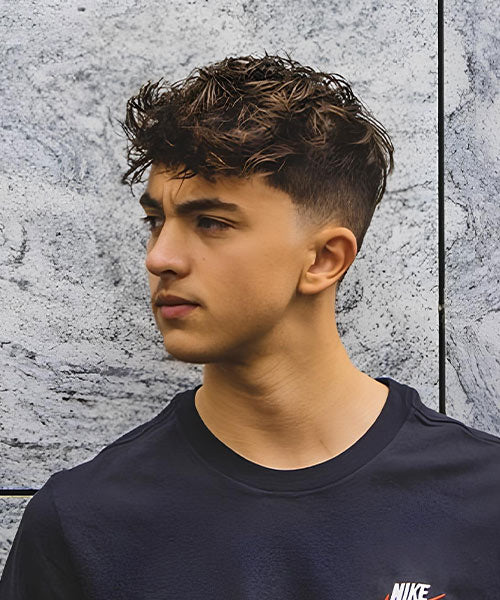
Also known as the Caesar cut, the French crop is one of the most underrated medium length hairstyles for men with thinning hair or a receding hairline. The sides and back are cut short, while two to three inches on top is combed forward into a blunt, textured fringe that sits low on the forehead, drawing attention away from the hairline entirely.
Apply a small amount of matte paste and comb the fringe forward and slightly down. It works on straight, wavy, and curly hair alike, which makes it one of the more versatile cuts here. Oval, square, and round faces all wear it well. If you’re over 40 and noticing your hairline creeping back, this is genuinely one of the best options on this entire list, since the forward fringe adds visual density right where you need it. Next, let’s talk about a style built for guys who’d rather tie their hair up than style it every day.
12. Man Bun / Top Knot
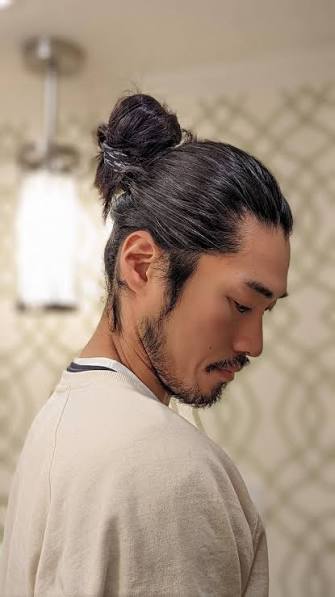
Once your hair passes the four-inch mark, gathering it into a bun becomes a real option, and it’s one of the lowest-effort styles on this list. Hair is left long and mostly undercut or tapered at the sides, gathered up, and tied off at the crown. It’s practical for gym days, work meetings, and everything in between.
Use a small hair tie (skip the elastic bands that snag and break strands) and a texturizing spray on the front sections to keep flyaways under control. This cut technically works on any hair type, though thick and wavy hair holds a bun shape best without needing constant readjustment. It flatters most face shapes since so much of the style sits above the hairline. The trade-off is patience. Growing to bun-length takes the better part of a year, so treat this as a long-term project rather than a weekend decision. If patience isn’t your thing, the disconnected undercut delivers instant contrast instead.
13. Disconnected Undercut
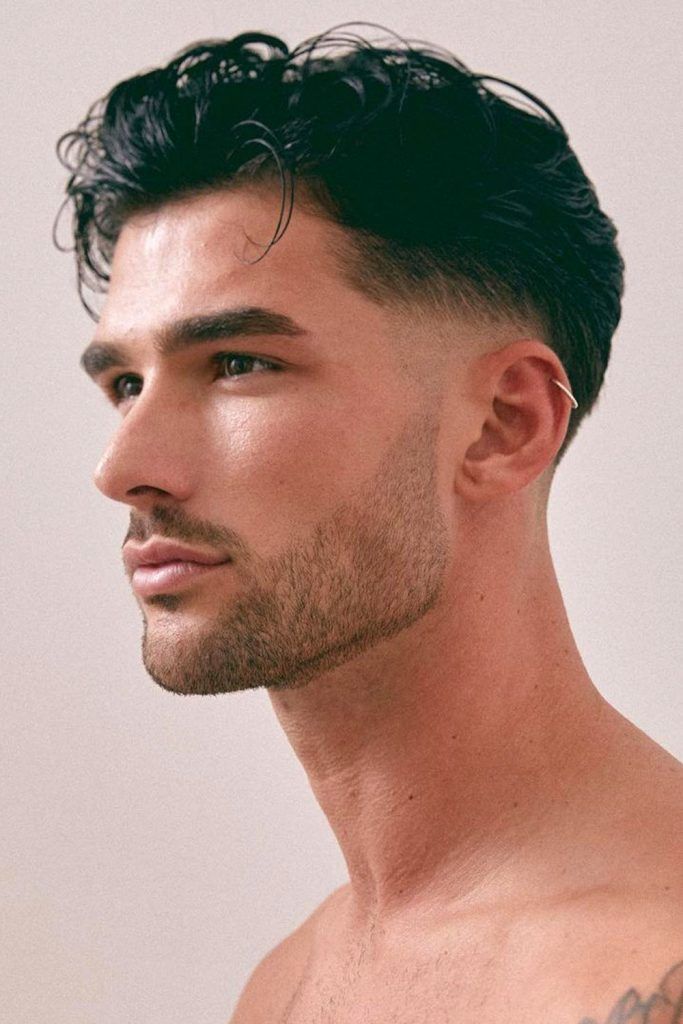
The disconnected undercut skips the gradual taper entirely. The sides and back are buzzed down to skin or close to it, while the top is left at three to five inches with no blending between the two lengths. The contrast is the whole point, and it reads as sharp and deliberate rather than accidental.
Style the top back with a pomade for a slicked finish, or leave it textured and forward-swept for something more casual. This cut suits nearly every face shape because the short sides visually slim the head while the top adds height and personality. It works best on straight to wavy hair, since very curly hair can make the disconnection look less crisp. Maintenance is a bit more demanding here. Because the sides are so short, you’ll want a touch-up every two to three weeks even though the top only needs trimming every couple of months. From here, let’s look at a cut that channels that same sharp contrast into something a little more office-friendly.
14. Comb Over Fade
Don’t let the name fool you into picturing your grandfather’s hairstyle. The modern comb over fade pairs a crisp, defined side part with a mid or high fade on the sides, creating a polished look that still reads as current rather than corporate. It’s a favorite among professional athletes for a reason: it looks sharp on camera and in a boardroom.
Blow-dry the top toward the part for smooth direction, then apply a lightweight pomade for flexible hold that moves without falling apart. This is one of the most versatile face-shape options on the list, working for oval, square, and round faces alike. Straight and wavy hair holds the part most cleanly, though a skilled barber can adapt it for looser curls too. It’s an easy choice if you need one haircut that works for both the office and the weekend. Now let’s talk about a style built specifically for guys with natural curl or coil pattern.
15. Curly and Coily Medium Top
This is the cut most “medium length hairstyles for men” lists forget to mention properly, and it’s a genuine gap worth filling. If you have naturally curly or coily hair, growing the top out to medium length rather than fighting it with heat and product gives you far more style options and a lot less daily maintenance. The sides are tapered or faded short while the curls on top are left to grow three to five inches, showing off your natural pattern.
Wash no more than twice a week with a moisturizing, sulfate-free shampoo, then apply a curl-defining cream to soaking wet hair before scrunching gently with a microfiber towel or an old cotton t-shirt. Air-dry or diffuse on low heat. This cut suits every face shape, since curl volume can be adjusted through layering to either add height or soften width. Regular trims every six to eight weeks keep the shape from becoming a shapeless cloud. If you’re after something with a bit more shape and flow through the length instead of tight curl definition, the layered lob is worth considering next.
16. Layered Lob (Flow Cut)
Borrowing its name from the women’s “long bob,” the men’s layered lob falls between the chin and shoulders with soft, face-framing layers running throughout. It’s a relaxed cut that reads as effortlessly put-together rather than deliberately styled, and it’s become a favorite among guys transitioning from medium length into genuinely long hair.
Use minimal heat here. A leave-in conditioner and a small amount of light oil keep the layers smooth and glossy without weighing them down. This style suits straight, wavy, and curly hair equally well, and it flatters oval, square, and heart-shaped faces. Because the layers do the heavy lifting, styling most mornings is as simple as running your fingers through damp hair. If you’re not quite ready for this much length, the final cut on our list is a shorter, more traditional alternative.
17. Long Ivy League
The Ivy League cut, essentially a longer, more textured version of the classic crew cut, has quietly become one of the most requested medium length hairstyles for men who want something polished without looking stiff. Two to three inches on top is left long enough to style in multiple directions, while the sides taper down neatly.
Style it forward for a casual look, to the side for something more traditional, or slicked straight back for formal occasions. A lightweight, matte-finish product keeps it looking current instead of dated. This cut is one of the most forgiving on the list, working for nearly every face shape and hair type from straight to wavy. It’s an especially smart pick if your workplace has a conservative dress code but you still want more versatility than a short back and sides allows.
Quick Comparison: Face Shape, Hair Type, and Maintenance
| Hairstyle | Best Hair Type | Best Face Shape | Trim Frequency | Daily Effort |
|---|---|---|---|---|
| Textured Crop | Straight, wavy, slight curl | Oval, square, heart | 3–4 weeks | Low |
| Curtain Fringe | Straight, wavy | Oval, heart, long | 5–6 weeks | Low-Medium |
| Modern Shag | Wavy, curly | Oval, diamond | 6–8 weeks | Low |
| Modern Mullet | Straight, wavy | Heart, oblong | 3–4 weeks | Low-Medium |
| Bro Flow | Wavy, textured | Long, oval | 8–12 weeks | Very Low |
| Warrior Cut | Straight, wavy | Strong jaw, oval | 4 weeks | Medium |
| Textured Quiff | Straight, wavy, thick | Round | 4 weeks | Medium-High |
| Modern Slick Back | Thick, wavy | Square, oval | 4–6 weeks | Medium |
| Messy Medium Layers | Wavy, curly | Oval, square, heart | 6–8 weeks | Low |
| Wolf Cut | Curly, coily | Round, square | 6 weeks | Medium |
| French Crop | Straight, wavy, curly | Oval, square, round | 4–6 weeks | Low |
| Man Bun | Thick, wavy | Most shapes | 10–12 weeks | Low |
| Disconnected Undercut | Straight, wavy | Most shapes | 2–3 weeks (sides) | Medium |
| Comb Over Fade | Straight, wavy | Oval, square, round | 3–4 weeks | Medium |
| Curly/Coily Top | Curly, coily | All shapes | 6–8 weeks | Medium |
| Layered Lob | Straight, wavy, curly | Oval, square, heart | 8–10 weeks | Low |
| Long Ivy League | Straight, wavy | Most shapes | 4–6 weeks | Low-Medium |
Styling Product Cheat Sheet
| Goal | Product Type | Best Applied To |
|---|---|---|
| Natural texture, grit | Sea salt spray | Damp hair, before air-drying |
| Matte hold, no shine | Clay or paste | Dry or slightly damp hair |
| Height and volume | Mousse | Roots, before blow-drying |
| Slick, shiny finish | Pomade | Damp hair, comb or finger-styled |
| Curl definition | Curl cream | Soaking wet hair, before diffusing |
| Frizz control, shine | Lightweight hair oil | Ends, applied last |
Common Mistakes Guys Make With Medium Length Hair (and How to Avoid Them)
Growing your hair out sounds simple until you’re three months in and it looks like nothing at all. Here are the mistakes that trip up most guys, and what to do instead.
- Skipping trims entirely. Growing hair out doesn’t mean avoiding the barber. Regular shape-up trims every four to eight weeks (depending on the cut) keep the ends healthy and the silhouette intentional, even while the overall length increases.
- Using too much product. More pomade doesn’t mean more style. A dime-sized amount is almost always enough. Overloading fine or thin hair with heavy product flattens it instead of adding texture.
- Ignoring hair type when choosing a cut. A style built for straight hair won’t behave the same way on curly or coily strands, and forcing it usually ends in frustration and a lot of wasted product.
- Rough towel-drying. Rubbing wet hair with a regular towel roughs up the cuticle and causes frizz, especially on wavy or curly textures. Pat it dry, or better yet, use a microfiber towel or an old cotton t-shirt.
- Not communicating clearly with your barber. Bring a reference photo, and tell them exactly how much time you’re willing to spend styling each morning. That single conversation prevents most bad haircuts.
- Applying heat without protection. Blow-drying or straightening medium length hair daily without a heat protectant leads to dryness and split ends over time, which undoes months of careful growing out.
Similar Variations Worth Knowing About
If none of the 17 above feel like an exact match, a few close variations are worth asking your barber about. The baby mullet is a softer, shorter take on the modern mullet, with less back length for guys who want the vibe without full commitment. The soft mullet with curtains blends two trends into one, combining a center-parted fringe with a mullet’s tapered back. A flat top offers a completely different silhouette, popular with tightly coiled hair, where the top is cut straight across for a distinctive, structured shape. And a twist-out with a mid fade gives guys with coily hair a way to combine defined texture on top with a sharp, faded contrast at the sides. Each of these takes one of the core 17 styles and shifts it slightly, so don’t be afraid to mix and match elements when you’re in the chair.
Hair Care Tips for Medium Length Hairstyles
Growing and maintaining medium length hair takes a bit more care than a short back and sides, mostly because there’s simply more hair to keep healthy.
- Wash two to three times a week rather than daily. Over-washing strips natural oils that keep medium and long hair looking healthy, especially for wavy, curly, and coily textures.
- Deep condition weekly, ideally overnight, if your hair leans dry, curly, or coily.
- Book trims on a schedule that matches your specific cut, not a generic “every six weeks” rule. Sharp, structured cuts need more frequent visits than loose, natural styles.
- Match your product to your hair type instead of chasing whatever’s trending. Fine hair needs lightweight formulas. Thick or coily hair needs moisture first, texture second.
- Protect your hair before heat styling. A basic heat protectant spray takes ten seconds and prevents months of growth from turning brittle.
- If you’re dealing with a receding hairline while growing out medium length hair, talk to your barber about forward-styled cuts like the French crop, which add visual density right where you need it most.
Final Thoughts
Medium length hair rewards patience more than any other length, but it also gives you more daily options than a short cut ever could. Whether you land on the low-effort bro flow, the structured warrior cut, or a curly top left to do its own thing, the right medium length hairstyle comes down to matching the cut to your actual hair type and face shape, not just a photo you liked online. Take this list to your next appointment, bring a reference photo, and tell your barber exactly what you learned here about medium length hairstyles for men.