
Having looked into many protective hairstyles, I know precisely what makes Marley twists look great for 6 weeks and not 4, and it is this kind of information that I wish to deliver to you rather than yet another photo gallery.
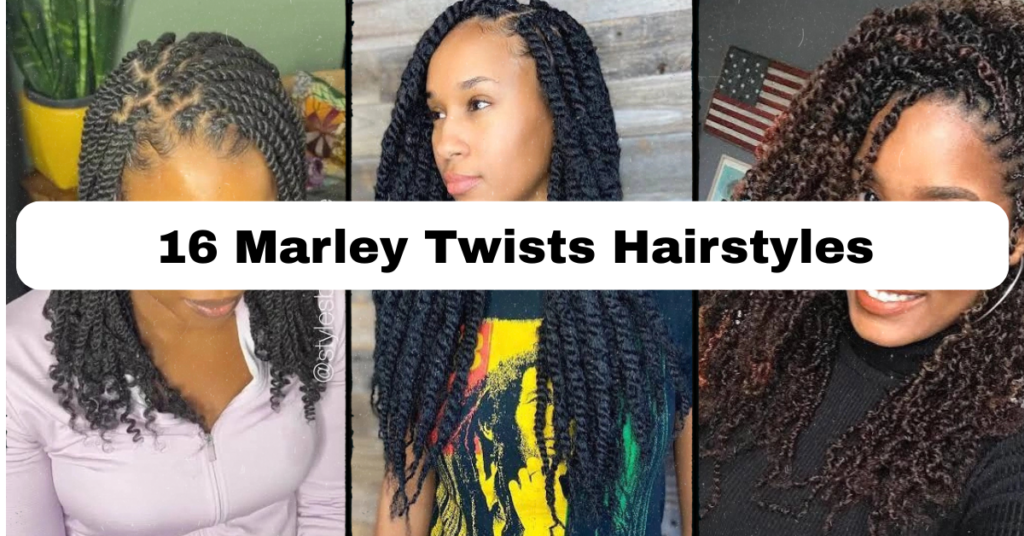
But what exactly are Marley twists? Marley twists are protective styling that uses a combination of natural hair and Marley hair extensions (a blend of synthetic or human hair with a coarse texture resembling that of afro-textured hair) to form kinked twists, usually staying on for 4-8 weeks.
Stay tuned as I will describe each of the 16 styles as well as the hair length and thickness that will make Marley twists work for you, maintenance routines, and minor blunders that kill any hairstyle prematurely.
Why Marley Twists Remain a Go-To Protective Style
Ever wonder why Marley twists keep showing up as a top recommendation for anyone growing out natural hair or taking a break from daily manipulation? It’s because they genuinely deliver on the “protective style” promise. Your real hair stays tucked away and shielded from daily heat, brushing, and environmental damage, while the twist itself gives you a full, textured look that closely resembles natural afro hair rather than the sleeker finish of box braids or sew-ins.
There’s also real versatility packed into this one style category. Marley twists can be worn short or long, chunky or fine, colored or natural, and styled into updos, ponytails, or buns depending on the day. I’ve organized these 16 variations by length, size, and styling approach, along with realistic maintenance guidance, so you walk into your next appointment knowing exactly what to ask for instead of just pointing at a photo. Let’s get into the styles.
16 Marley Twists Hairstyles to Try Next
1. Classic Shoulder-Length Marley Twists

This is the most common starting point for anyone new to Marley twists, offering a manageable length that’s easy to style while still delivering the full, voluminous look the style is known for. The core technique involves sectioning natural hair into even parts, then twisting each section together with a piece of Marley hair from root to tip. This length works well because it’s substantial enough for updos or ponytails but light enough to avoid excessive tension on the scalp.
My practical tip: ask your stylist to keep the twists a consistent, medium thickness throughout, since uneven sizing is one of the most common giveaways of a rushed installation. This length suits nearly every face shape and works for both casual and professional settings, solving the everyday need for a protective style that requires minimal daily effort.
2. Waist-Length Marley Twists
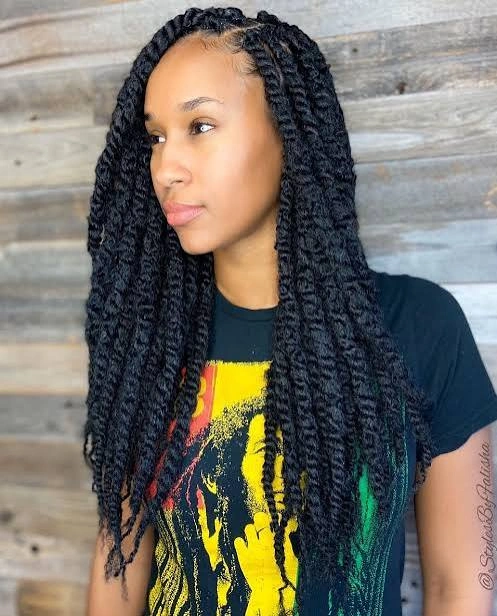
For anyone wanting real drama and versatility, waist-length Marley twists offer significant styling range, from full, flowing length to elaborate updos with plenty of hair to work with. The extra length does require more Marley hair per section and a longer installation appointment, often six or more hours depending on the stylist.
A useful tip: this length benefits from being worn in a bun or ponytail more often than fully loose, since the extra weight at length can put more strain on the scalp over a full day. This style suits special occasions and anyone wanting a bold, statement length, and it solves the desire for serious length without waiting years for natural hair growth.
3. Bob-Length Marley Twists

A bob-length version keeps the twists short, typically chin to shoulder length, creating a lower-maintenance option that’s easier to manage day to day while still delivering the signature textured look. This length works particularly well for anyone new to protective styles or transitioning from shorter natural hair, since it doesn’t require an extreme amount of added length to look full and complete.
My tip: request slightly thinner twists for this shorter length, since thick, chunky twists can look disproportionately heavy on a shorter style. This length suits professional settings especially well and solves the challenge of wanting a protective style without committing to significant added length.
4. Marley Twist Updo

Gathering Marley twists into a full updo, whether pinned into a bun, wrapped into a chignon-style shape, or twisted into a crown pattern, creates a polished, elevated look suited for events or professional occasions. The technique typically uses bobby pins and a light-hold gel along the edges to secure the twists without pulling too tightly at the roots.
A practical tip: distribute the pins evenly around the updo rather than concentrating them in one area, which prevents localized tension and discomfort over a long day. This style suits weddings, formal events, and any occasion calling for hair fully off the neck and shoulders, and it solves the problem of wanting an elegant look without undoing the protective style itself.
5. Half-Up Marley Twists
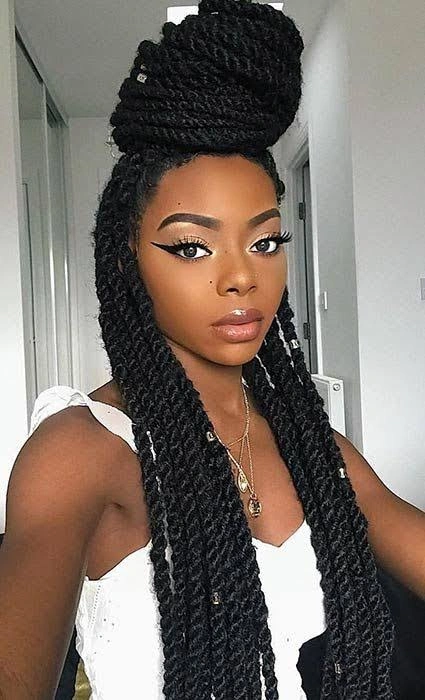
The half-up variation gathers the top section of twists while leaving the rest down, offering a middle ground between a full updo and wearing all the twists loose. This works particularly well for showing off length while still keeping hair out of your face during the day.
My tip: use a stretchy, fabric-covered hair tie rather than a thin elastic band, since standard bands can snag and damage the twists over repeated use. This style suits both casual and semi-formal settings and solves the common desire for a look that’s partially secured without fully committing to an updo.
6. Marley Twist High Ponytail

Gathering all the twists into a single high ponytail creates a bold, voluminous silhouette that works especially well for showing off length and fullness at once. The technique requires a sturdy elastic and careful sectioning to avoid excessive pulling at the hairline, since a high ponytail concentrates more tension than a lower placement.
A practical tip: wrap a section of the twists around the base of the ponytail to conceal the elastic for a more finished, polished look. This style suits workouts, warm weather, and casual outings particularly well, and it solves the challenge of wanting the twists secured back without losing their visual volume and texture.
7. Marley Twist Bun

A large, gathered bun made from Marley twists offers one of the most practical, low-maintenance styling options within the style, keeping length completely contained and off the neck. The technique involves gathering the twists into a ponytail base, then wrapping and pinning the length around itself into a full, rounded bun shape.
My tip: use large, flat bobby pins rather than small ones for securing the bun, since the added thickness of Marley twists requires more substantial pins to hold securely through a full day. This style suits professional settings, workouts, and hot weather equally well, solving the practical need for a style that’s completely secure and requires zero daily styling once it’s set.
8. Colored Marley Twists
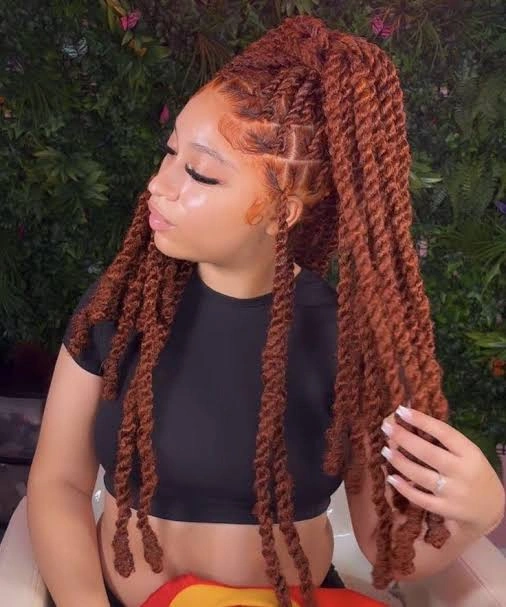
Adding color to Marley twists, whether through pre-colored Marley hair or a semi-permanent rinse applied to the twists themselves, brings a personalized, fashion-forward element to the style. Popular options include warm honey tones, deep burgundy, or even bold colors like blue or purple woven throughout. A practical tip: choose pre-colored Marley hair extensions rather than dyeing the twists yourself after installation, since coloring already-installed twists can be uneven and potentially damaging to the synthetic fibers. This style suits guys and women wanting a bold, individualized look, and it solves the desire for a protective style that still allows for real creative self-expression.
9. Chunky Marley Twists

Opting for larger, thicker twist sections creates a bold, voluminous look that installs significantly faster than smaller twists, since fewer total sections are needed to cover the whole head. This makes chunky twists a popular choice for anyone with limited time for a lengthy salon appointment. My tip: chunky twists tend to look best at medium to long lengths, since very short chunky twists can look disproportionately thick relative to their length. This style suits casual, bold aesthetics and solves the practical problem of wanting a full, voluminous protective style without sitting in a salon chair for six or more hours.
10. Micro Marley Twists
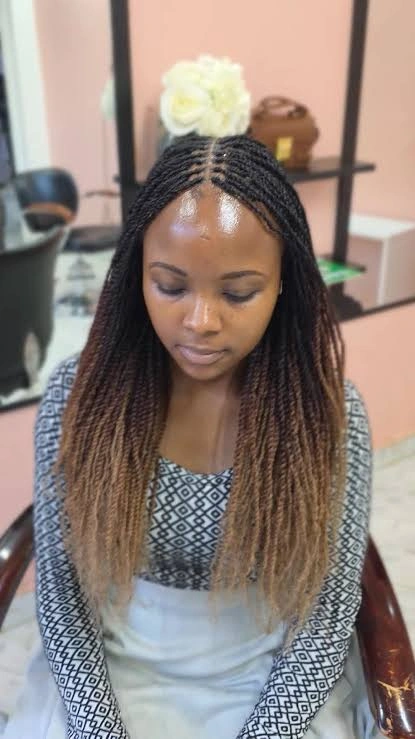
At the opposite end of the spectrum, micro Marley twists use very small, tightly twisted sections for a detailed, more natural-looking finish that moves closer to how loose natural hair would behave. This technique requires significantly more time to install, often eight or more hours, and typically costs considerably more due to the labor involved. A practical tip: budget extra time for your appointment and consider breaking micro installations into two sessions if your stylist offers that option, since sitting for eight-plus hours in one sitting is genuinely demanding. This style suits anyone wanting the most natural-looking, long-lasting version of Marley twists, and it solves the desire for a detailed, refined finish rather than the bolder look of larger twists.
11. Marley Twists with Curly Ends

This variation twists the roots and mid-lengths as usual but leaves the very ends unraveled into a soft, curly finish, creating a blended, more natural-looking transition rather than a hard, twisted tip throughout. The technique involves carefully separating and fluffing out the last inch or two of Marley hair at the end of each twist. My tip: apply a small amount of curl-defining cream to the unraveled ends to help them hold their shape and prevent excessive frizz over time. This style suits a softer, more romantic aesthetic and solves the challenge of wanting some styling variation within the twists themselves rather than a uniform look from root to tip.
12. Marley Twist and Faux Locs Combo

Combining Marley twists with faux locs in the same install creates a textured, layered look that offers more visual variety than either style alone. This is typically done by alternating rows or sections between the two techniques, or using twists in some areas (like the crown) and locs elsewhere. A practical tip: discuss the pattern and placement carefully with your stylist beforehand, since a poorly planned combination can look accidental rather than intentional. This style suits anyone wanting a truly unique, personalized protective style, and it solves the desire for more textural variety and visual interest than a single uniform technique provides.
13. Deep Side-Part Marley Twists

Adding a deep side part to your Marley twist installation creates asymmetry and a slightly more dramatic, editorial finish compared to a center or straight-back part. The technique involves parting the hair deeply to one side before beginning the twisting process, which affects the whole installation pattern from the very first section. My tip: use a rat-tail comb to establish a crisp, deep part before your stylist begins twisting, since adjusting the part after installation is far more difficult. This style suits fashion-forward looks and solves the desire for a Marley twist style with more dimension and drama than a straightforward, evenly parted default.
14. Marley Twists with Beads
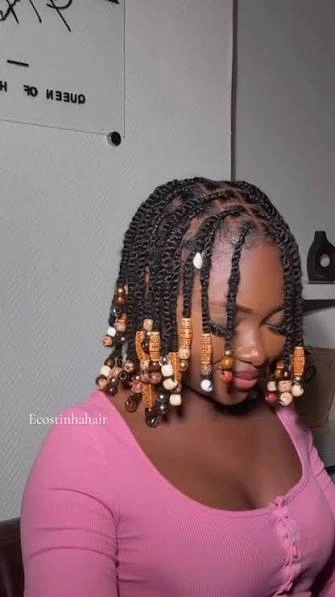
Adding beads to the ends of Marley twists brings a decorative, often culturally significant detail to the style, with options ranging from simple wooden beads to more elaborate metal cuffs. The beads are typically threaded onto the twist ends after the twisting is complete, secured to prevent slipping off. A practical tip: choose lightweight beads over heavier ones, since substantial weight at the ends of many twists can add up and create real strain on the scalp over a full day of wear. This style suits festivals, cultural celebrations, and anyone wanting a bold, decorative touch, and it solves the desire for a Marley twist look with genuine personality and detail beyond the twists alone.
15. Two-Tone Ombré Marley Twists

This variation uses two different colors of Marley hair, typically a darker shade near the roots transitioning into a lighter tone toward the ends, creating a gradient effect that adds visual depth and movement. The technique requires careful color-matching between the two Marley hair shades to ensure a smooth, gradual transition rather than an abrupt color change. My tip: request a color sample or swatch from your stylist before your appointment to confirm the two shades blend well together under different lighting conditions. This style suits guys and women wanting a bold, dimensional look without a fully saturated single color, and it solves the challenge of wanting visual depth and interest within a protective style.
16. Crochet Marley Twists

Rather than the traditional method of hand-twisting each section from scratch, crochet Marley twists use a crochet hook to loop pre-twisted Marley hair pieces directly onto braided natural hair underneath, significantly speeding up the installation process. This technique typically takes two to four hours, roughly half the time of traditional hand-twisted installations. A practical tip: this method requires slightly more frequent maintenance at the base, since the crochet technique can sometimes loosen faster than hand-twisted roots. This style suits anyone with limited time for a salon appointment who still wants the full Marley twist look, and it solves the practical problem of wanting this protective style without dedicating a full day to the installation process.
Marley Twists by Hair Type and Density
Not every version of this style works equally well on every hair type. Use this table to match the right approach to your natural hair before your appointment.
Hair Type and Style Guide
| Hair Type/Density | Best Marley Twist Styles | Why It Works |
|---|---|---|
| Fine or thin natural hair | Micro Marley twists, bob-length twists | Smaller sections reduce visible gaps and scalp strain |
| Thick or dense natural hair | Chunky Marley twists, waist-length twists | Handles larger sections well without looking sparse |
| Shorter natural hair | Bob-length twists, crochet Marley twists | Doesn’t require excessive length to achieve a full look |
| Sensitive or easily irritated scalp | Chunky Marley twists, Marley twist bun | Fewer total sections means less overall tension |
| Color-treated or previously damaged hair | Colored Marley twists, two-tone ombré twists | Adds color variety without further chemical processing |
Installation Time and Cost Comparison
Marley twists vary significantly in both installation time and price depending on size and length. Here’s a realistic breakdown for planning purposes.
Time and Cost Breakdown
| Style | Installation Time | Typical Duration Worn | Estimated Cost Range |
|---|---|---|---|
| Classic Shoulder-Length Twists | 3–5 hours | 4–6 weeks | $100–$200 |
| Waist-Length Twists | 6–8 hours | 5–7 weeks | $180–$350 |
| Bob-Length Twists | 2–4 hours | 3–5 weeks | $70–$150 |
| Chunky Marley Twists | 2–3 hours | 4–6 weeks | $80–$160 |
| Micro Marley Twists | 8+ hours | 6–8 weeks | $200–$400 |
| Crochet Marley Twists | 2–4 hours | 3–5 weeks | $90–$180 |
Prices vary based on region, stylist experience, and the amount of Marley hair used, so treat these as general planning ranges rather than fixed quotes.
Common Mistakes and How to Avoid Them
Even a well-installed set of Marley twists can run into trouble without proper care. Here are the mistakes I see most often, and how to avoid each one.
Leaving the style in too long : Wearing Marley twists past the eight-week mark significantly increases the risk of matting and tangling at the new growth near the roots. Stick to the recommended removal window based on your twist size and hair growth rate.
Skipping nighttime protection : Cotton pillowcases create friction that frizzes twists quickly and pulls at the roots overnight. A satin or silk bonnet, scarf, or pillowcase protects the style and extends its lifespan considerably.
Installing twists that are too tight : Excessive tension at the roots, especially along the hairline, can lead to traction alopecia over time. A properly installed twist should feel secure without pulling painfully at the scalp.
Neglecting scalp care underneath : A protective style doesn’t mean the scalp gets ignored entirely. Regular application of a lightweight oil or scalp spray prevents dryness, itching, and buildup underneath the twists.
Using the wrong Marley hair texture : Mismatched hair texture between your natural hair and the Marley extensions creates an obvious, unnatural-looking blend. Bring a sample of your natural hair’s texture to your appointment if you’re unsure which Marley hair type to choose.
Washing too infrequently or incorrectly : Skipping washes entirely leads to product buildup and odor, while washing incorrectly can cause the twists to unravel prematurely. A diluted shampoo applied gently to the scalp every one to two weeks strikes the right balance.
Similar Variations Worth Exploring
If none of these 16 styles feel like the exact fit, these related variations offer a similar protective-style benefit with a slightly different technique or finish.
- Havana twists — a similar twisted protective style using a softer, more human-hair-like texture instead of Marley hair’s coarser feel.
- Passion twists — a wavier, bohemian-inspired variation that uses a different type of pre-looped hair for a softer overall look.
- Senegalese twists — smoother, more rope-like twists using a different hair type that creates a sleeker finish than Marley’s textured look.
- Kinky twists — very similar to Marley twists but often using a slightly different extension hair type, resulting in subtle texture differences.
- Spring twists — a coiled, springy variation that creates a bouncier, more voluminous texture than standard Marley twists.
Hair Care Tips for Marley Twists Hairstyles
Keeping this protective style looking good, and keeping your natural hair healthy underneath, comes down to a handful of consistent habits.
- Moisturize regularly. Spritz a lightweight leave-in conditioner or oil mixture onto your scalp and twists every few days to prevent dryness throughout the wear period.
- Wash gently, not constantly. A diluted shampoo applied directly to the scalp every one to two weeks keeps things clean without unraveling the twists.
- Protect your hairline. The hairline typically carries the most tension in any twisted style, so avoid pulling it into tight ponytails or ties too frequently.
- Sleep with protection every night. A satin bonnet, silk scarf, or silk pillowcase reduces friction significantly and helps the style stay neat for weeks longer.
- Trim your natural hair before installation. Removing split ends before twisting prevents further damage from getting trapped and tangled inside the Marley hair.
- Don’t overdo the product. Heavy oils, gels, and creams can build up underneath the twists over several weeks, so use lighter formulas and apply sparingly, focused mainly at the roots and scalp.
Final Thoughts
Marley twists offer real versatility for anyone wanting a protective style that still delivers serious visual impact, whether you go with a low-maintenance bob-length version or a bold, waist-length statement style. The right choice comes down to your natural hair type, how much time you can dedicate to installation, and how you plan to wear the style day to day.
I hope this guide gave you a clearer sense of which Marley twists hairstyle actually fits your hair, your schedule, and your budget, along with the realistic time and maintenance details many guides tend to skip. Bring a couple of these ideas to your next appointment, and you’ll walk in knowing exactly what to ask for.