
Having been to many barber shops and having learned enough about fade technique, I am aware of what makes a bald fade look perfect for weeks and not for days, growing into an unkempt patchy hairstyle. This real-life knowledge is what I am going to share in this guide and not just a compilation of nice pictures taken from Instagram.
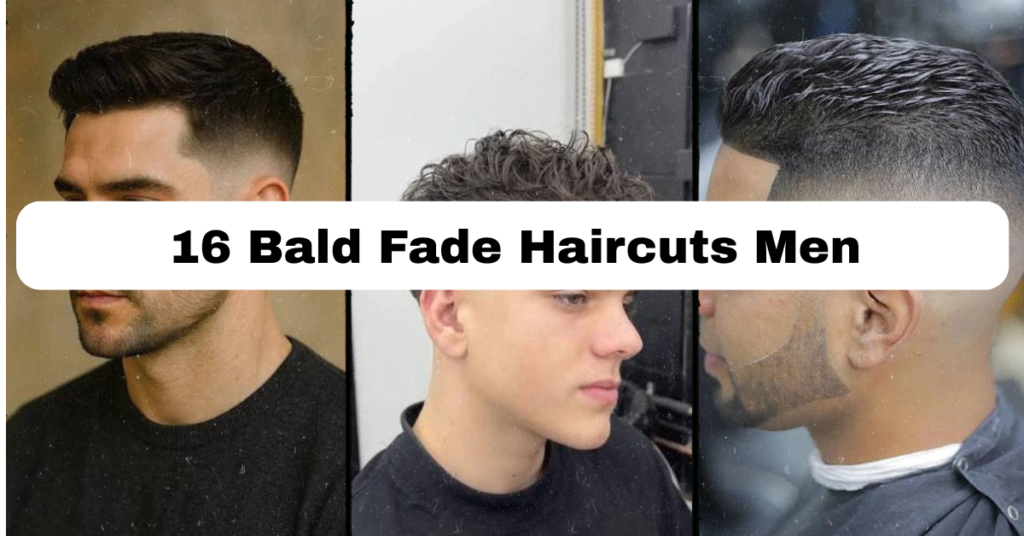
Now let’s see what is a bald fade haircut? The bald fade haircut is a kind of haircut where hair tapers from top downwards to leave absolutely smooth and bald area near ears and neck, and it can be combined with any other haircut including pompadour or curly hairstyle.
Continue reading and learn everything you need to know about bald fades. Here we will go over all 16 variations of bald fades, proper way to pick the fade height according to face shape, maintenance schedule, and tips not to make your perfect bald fade hairstyle look patchy after a week or two.
Why the Bald Fade Remains a Barbershop Staple
Ever wonder why the bald fade shows up in nearly every barbershop reference photo, regardless of the overall style? It’s because the fade itself is a technique, not a style — it’s the foundation that makes almost any haircut on top look sharper, more intentional, and more modern. A skilled gradient from skin to hair eliminates the harsh, dated line that older fade and taper cuts used to leave behind, which is exactly why the bald fade has stayed relevant across decades of changing trends on top.
There’s also real flexibility built into this cut. The height of the fade — low, mid, or high — completely changes the overall look and how it pairs with different face shapes, hair textures, and personal styles. I’ve organized these 16 variations by fade height, top style, and maintenance level, along with realistic guidance on how often you’ll need touch-ups, so you can walk into your next barber appointment knowing exactly what to ask for. Let’s get into the cuts.
16 Bald Fade Haircuts for Men to Try Next
1. Low Bald Fade with Pompadour
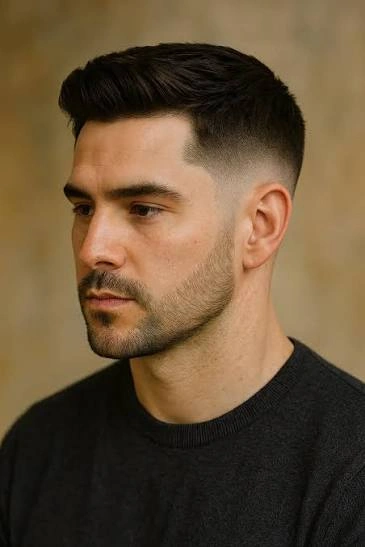
This combination pairs a subtle, low fade that starts just above the ears with a classic pompadour on top, creating a look that’s polished without being overly dramatic. The core technique keeps the fade contained to a small area near the hairline, letting the pompadour’s height and volume do most of the visual work. For styling, use a strong-hold pomade and blow-dry the top section upward and back before combing it into shape.
My practical tip: ask your barber to keep the fade subtle rather than aggressive, since a low fade paired with a tall pompadour can look unbalanced if the fade is too dramatic. This style suits classic, professional settings and rounder or longer face shapes especially well, and it solves the problem of wanting a sharp haircut that doesn’t feel overly trendy or attention-grabbing.
2. Mid Bald Fade with Textured Crop
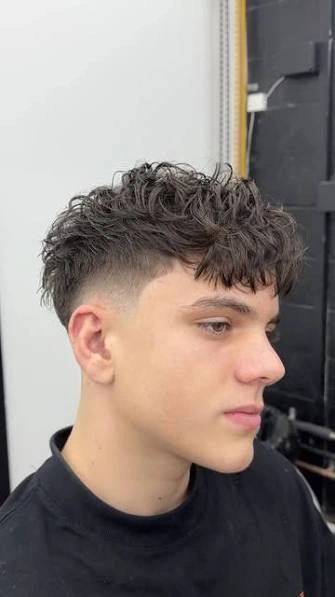
The mid fade sits right in the sweet spot between subtle and bold, starting around the temple area and creating a versatile base that works with almost any top style. Paired with a textured crop — short, choppy layers on top styled with a matte paste — this combination reads as modern and low-maintenance at the same time.
A useful tip: ask for a slightly longer fringe if you want the option to style it forward or to the side depending on your mood that day. This style suits nearly every face shape, works well for both casual and semi-formal settings, and solves the common desire for a haircut that looks deliberately styled without requiring much daily effort.
3. High Bald Fade with Slick Back
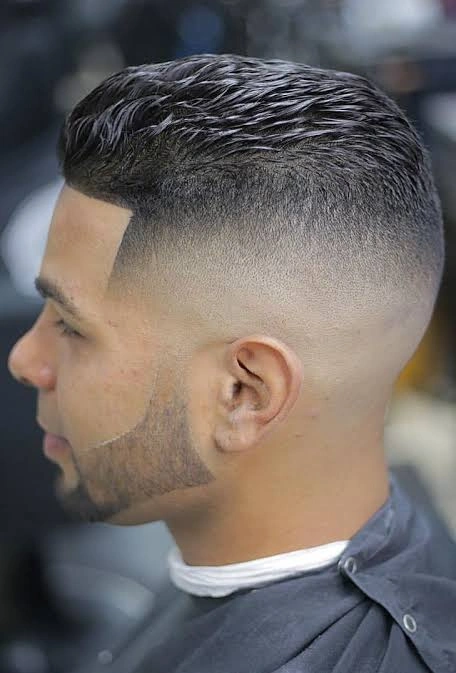
For a bold, sharp look, a high fade starting near the top of the head paired with a fully slicked-back top creates striking contrast between the closely shaved sides and the smooth, styled length on top. The technique requires precise blending at the highest point of the fade, since any unevenness is far more visible with a high fade than a low or mid one.
My tip: use a strong-hold gel and a fine-tooth comb for the slick-back styling, working in small sections for a truly smooth, bump-free finish. This style suits modern, editorial-inspired looks and works particularly well on straight to wavy hair textures, solving the desire for a haircut with real visual drama and confidence.
4. Bald Fade with Hard Part
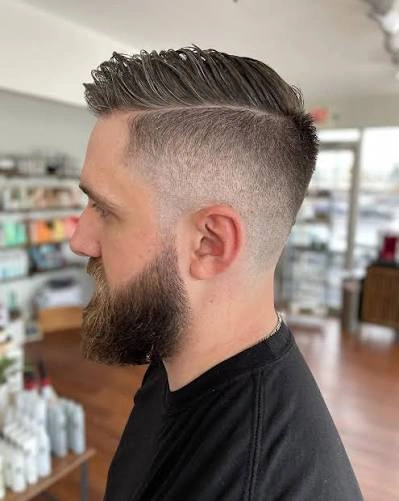
Adding a hard part — a thin, shaved line separating the top section from the fade or from a side part — brings extra definition and a slightly edgier finish to any bald fade combination. The technique requires careful, steady clipper work, typically done with a fine trimmer or edger rather than standard clippers.
A practical tip: this detail needs touch-ups more frequently than the rest of the fade, since new growth fills in a hard part faster than it affects the broader fade area. This style pairs well with a pompadour, textured crop, or slicked-back top, and it suits guys wanting an extra layer of precision and detail, solving the challenge of wanting a haircut that looks freshly cut even a week or two after the appointment.
5. Bald Fade with Curly Top
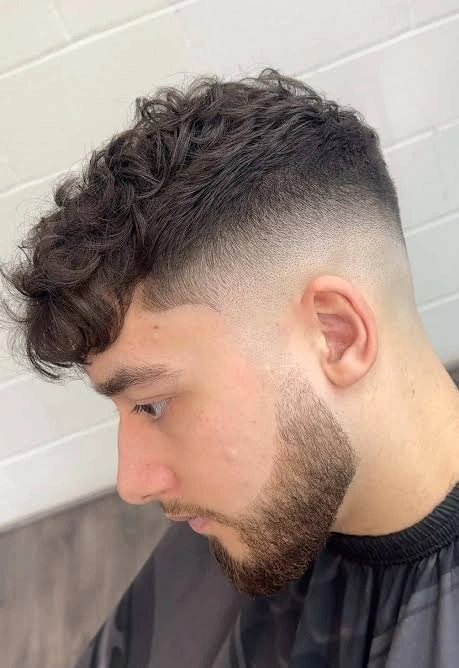
This combination keeps the sides and back closely faded to skin while preserving natural curl pattern and volume on top, creating striking contrast between the clean sides and voluminous curls above. The technique requires a barber comfortable working with curly textures, since curl pattern can shrink significantly and make length harder to judge during the cut.
My tip: ask for the curls to be cut dry rather than wet, since curly hair often looks noticeably different once it springs back up after drying. This style celebrates natural texture and works beautifully for guys who don’t want to fight their curl pattern with heat or heavy product, solving the frustration of feeling like a sharp fade always requires straight or wavy hair on top.
6. Bald Fade Mohawk
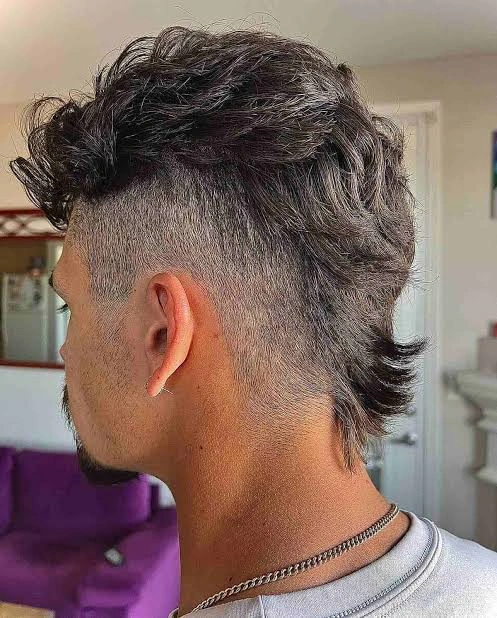
The bald fade mohawk takes the classic mohawk concept and channels it through a modern lens, using a bald fade on both sides instead of a fully shaved or buzzed area, which creates a softer transition than the traditional punk-inspired version. The center strip can be styled straight up for a bold look or slightly softened and combed to one side for a more subtle take. A practical tip: ask your barber for a slightly wider center strip than a traditional mohawk, since a very narrow strip can look severe or dated compared to the wider, more blended modern version. This is one of the boldest styles on this list, suited for guys wanting a genuine statement cut, and it solves the challenge of wanting a mohawk’s edge without the stark, all-or-nothing look of the original style.
7. Bald Fade Comb Over
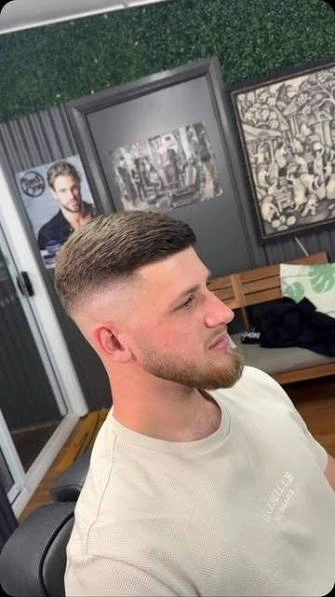
The comb over remains one of the most classic pairings with a bald fade, using a clean side part and length on top combed neatly across the head, contrasting sharply with the closely faded sides. This combination works particularly well for professional or formal settings where a polished, controlled look matters. My tip: use a lightweight pomade rather than a heavy wax for daytime wear, saving the stronger-hold products for evenings or special occasions when you need the style to last longer without a midday touch-up. This style suits nearly every face shape and hair texture, and it solves the desire for a timeless, professional haircut that still incorporates a modern fade element.
8. Bald Fade Buzz Cut

For the lowest-maintenance option on this list, pairing a bald fade with a short, uniform buzz cut on top creates a clean, no-fuss look that requires almost no daily styling. The technique still demands precision in the fade transition, even though the top itself is straightforward, since the contrast between the buzzed top and bald sides needs to blend smoothly rather than showing an abrupt line. A practical tip: ask for a slightly longer guard on top (around a quarter to half inch) rather than going too short, since a bit of length gives the fade more visual gradient to work with. This style suits active lifestyles, warmer climates, and guys who genuinely don’t want to spend time styling in the morning, solving the challenge of wanting a sharp look with essentially zero daily maintenance.
9. Bald Fade with Quiff
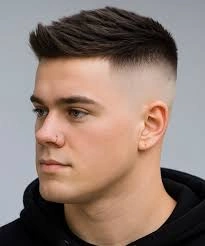
A quiff paired with a bald fade brings volume and height to the front of the head while keeping the sides clean and faded, creating a style that feels both classic and current. The technique involves leaving more length at the front and crown than the rest of the top, then styling it upward and slightly back with a strong-hold product. My tip: blow-dry the front section with a round brush before applying product, since this builds a natural base of volume that product alone can’t fully replicate. This style suits guys wanting a bit more height and drama than a standard textured crop, and it solves the desire for a haircut with real personality on top while keeping the sides sharp and low-maintenance.
10. Bald Fade with Beard Fade
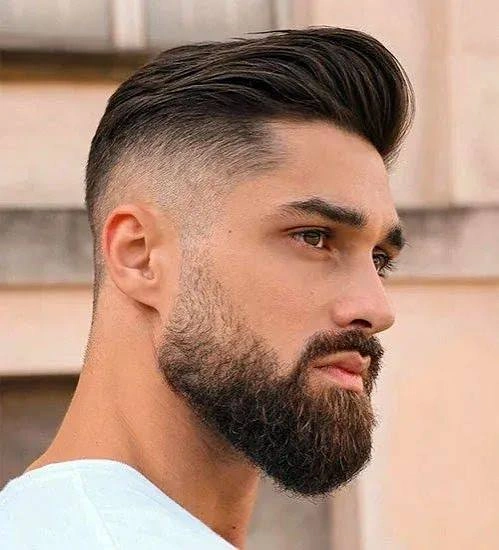
This variation extends the fading technique from the hairline down into the beard, creating a cohesive, blended look between the hair and facial hair rather than two separate, disconnected styles. The technique requires a barber skilled in beard work specifically, since blending the fade around the ears and jawline takes a different approach than a standard hair fade alone. A practical tip: maintain the beard fade at home between barber visits using a beard trimmer with adjustable guards, focusing on the connection points near the ears and jaw where growth shows fastest. This style suits guys with facial hair wanting a fully coordinated, polished look, and it solves the common issue of a sharp haircut looking disconnected from an unkempt or unstyled beard.
11. Bald Fade with Design Line-Up
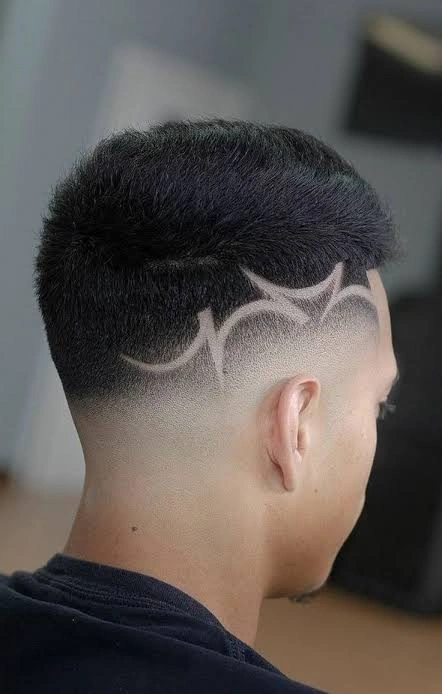
Adding a shaved design or line-up detail into a bald fade brings a personalized, artistic element to the cut, ranging from a simple straight line along the part to more intricate geometric or freehand patterns. The technique requires a barber experienced with freehand razor work, since these designs are typically cut without a guide or stencil. My tip: start with a simpler design if this is your first time trying the style, since intricate patterns take longer to grow out gracefully compared to a plain fade. This style suits guys wanting a genuinely distinctive, personalized haircut, and it solves the desire for a cut that stands out with real detail rather than blending into the crowd of standard fades.
12. Bald Fade with 360 Waves
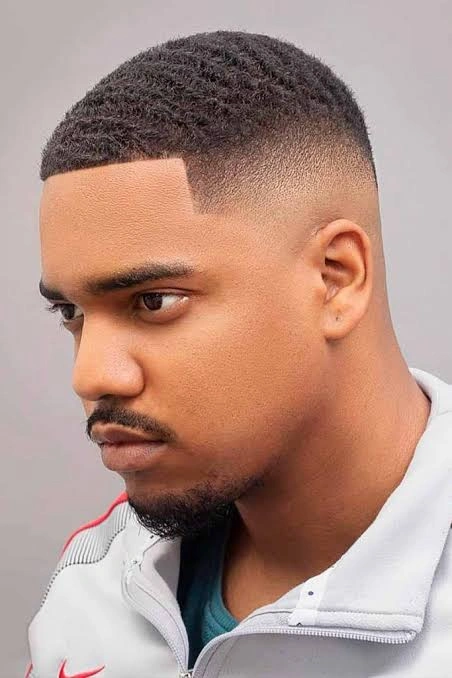
Popular within textured and coily hair communities, 360 waves paired with a bald fade create a rippling, wave-like pattern across the top of the head that flows seamlessly into the faded sides. Achieving genuine waves requires consistent brushing over weeks with a medium or hard-bristle brush, along with a durag worn regularly to train the hair pattern. A practical tip: get your fade touched up every one to two weeks to keep the sides crisp, since the wave pattern on top looks most striking against a freshly faded, clean edge. This style suits guys with coily or curly hair textures specifically, and it solves the challenge of wanting a distinctive, textured top style that still pairs cleanly with a sharp fade.
13. Bald Fade with Afro Top
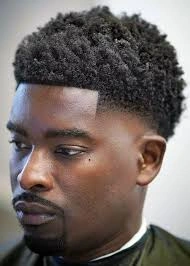
This combination keeps natural, unmanipulated curl texture and volume on top while fading the sides down to skin, creating one of the boldest contrasts on this list between voluminous top and completely bare sides. The technique requires careful attention to the fade’s height, since a lower fade tends to balance a fuller afro better than an aggressively high one. My tip: use a curl-defining cream or gel on the top section to enhance natural definition without weighing down the volume. This style celebrates natural texture fully and suits guys wanting maximum contrast and a genuinely striking silhouette, solving the desire for a haircut that highlights rather than minimizes natural curl volume.
14. Bald Fade Faux Hawk

A softer alternative to the full mohawk, the faux hawk pairs a bald fade with slightly longer hair through the center that’s styled upward but blends more naturally into the sides rather than creating the mohawk’s stark contrast. The technique typically involves a gradual, blended length increase from the fade toward the center rather than the mohawk’s more defined, separated strip. A practical tip: use a matte clay rather than a shiny gel for styling, since the faux hawk generally looks more modern with a textured, non-glossy finish. This style suits guys wanting some of the mohawk’s edge without its full commitment, and it solves the challenge of wanting a bold, styled top that still feels wearable for everyday, non-statement occasions.
15. Bald Fade Side Part Crop
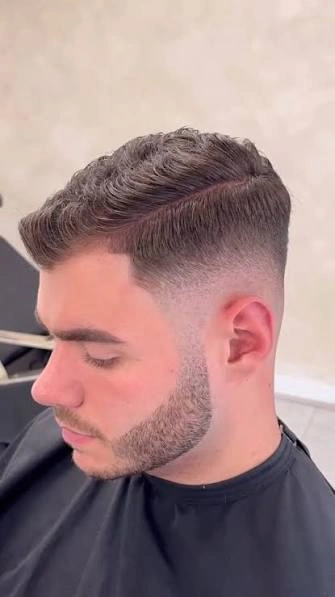
This combination adds a clean, defined side part to a textured crop style, creating a look that feels slightly more polished and intentional than a crop with no visible part. The technique works well with a mid or low fade, since the side part detail draws enough visual attention on its own without needing an aggressive fade height to compete with. My tip: ask your barber to cut the part with clippers rather than just combing it in, since a clipper-cut part holds its shape far longer between washes and stylings. This style suits professional and casual settings alike, and it solves the desire for a crop style with just a bit more structure and definition than the fully undefined, texture-forward version.
16. Drop Bald Fade
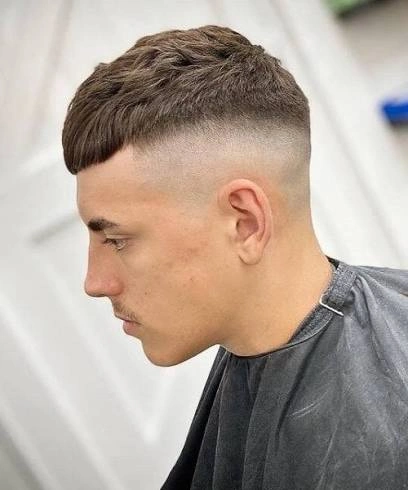
The drop fade curves downward behind the ear rather than following a straight, level line around the head, creating a more dynamic, rounded silhouette that many guys find more flattering than a traditional straight fade. This technique requires precise clipper control to execute the curve smoothly, making it one of the more technically demanding fades on this list. A practical tip: this style specifically benefits from a barber experienced with drop fades, since an uneven curve is more noticeable and harder to fix than a mistake in a standard straight fade. This style pairs well with nearly any top style and particularly flatters rounder or square face shapes by adding visual length, solving the desire for a fade with more shape and personality than the standard straight-across version.
Bald Fade Height by Face Shape
Choosing the right fade height makes a real difference in how flattering the overall haircut looks. Use this table as a starting point before your next appointment.
Face Shape and Fade Height Guide
| Face Shape | Recommended Fade Height | Why It Works |
|---|---|---|
| Round | Low bald fade, drop bald fade | Adds visual length and reduces width at the sides |
| Square | High bald fade, mid bald fade | Softens strong jawlines while keeping definition |
| Oval | Any fade height | Naturally balanced proportions work with nearly every style |
| Long or rectangular | Low bald fade with volume on top | Reduces the appearance of extra length in the face |
| Heart-shaped | Mid bald fade with textured crop | Balances a wider forehead with a fuller top |
Maintenance and Cost Comparison
Bald fades vary in how often they need touch-ups depending on hair growth speed and fade height. Here’s a realistic planning guide.
Bald Fade Maintenance at a Glance
| Style | Touch-Up Frequency | Home Maintenance Needed | Estimated Cost Range |
|---|---|---|---|
| Low Bald Fade with Pompadour | 3–4 weeks | Daily styling product | $25–$60 |
| High Bald Fade with Slick Back | 2–3 weeks | Daily styling, gel | $30–$70 |
| Bald Fade with Hard Part | 1–2 weeks | Minimal | $30–$65 |
| Bald Fade Buzz Cut | 3–4 weeks | None | $20–$45 |
| Bald Fade with Beard Fade | 2–3 weeks | Beard trimmer touch-ups | $35–$80 |
| Bald Fade with Design Line-Up | 1–2 weeks | Minimal | $35–$75 |
| Bald Fade with 360 Waves | 1–2 weeks | Daily brushing, durag | $25–$55 |
Prices vary by region and barber experience, so treat these as general planning ranges rather than fixed quotes.
Common Mistakes and How to Avoid Them
Even a great bald fade concept can go wrong with poor execution or upkeep. Here are the mistakes I see most often, and how to avoid each one.
Waiting too long between touch-ups : A bald fade grows out faster than most other haircuts since the contrast between skin and hair is so stark. Letting it grow past two to four weeks (depending on fade height) makes the transition look muddy rather than crisp.
Choosing a fade height without considering face shape : A fade that looks great on someone else might not flatter your specific proportions. Discuss face shape with your barber before committing to a fade height, especially for rounder or longer face shapes.
Going to a barber without fade experience : Not every barber specializes in seamless blending, and an inexperienced hand can leave visible lines or uneven patches. Look at a barber’s portfolio specifically for fade work before booking, not just general haircuts.
Skipping aftercare between appointments : Neglecting the scalp between visits, especially for very short or bald sides, can lead to dryness, irritation, or ingrown hairs. A light moisturizer or scalp oil helps maintain healthy skin in the faded areas.
Over-styling the top section : Excessive product on top can look greasy or stiff rather than polished, especially in contrast with the clean, bare sides. Apply styling product in thin layers, adding more only as needed.
Ignoring growth patterns and cowlicks : Every head has natural growth patterns that affect how a fade and top style blend together. Point out any cowlicks or unusual growth directions to your barber before the cut begins.
Similar Variations Worth Exploring
If none of these 16 combinations feel like the exact fit, these related variations offer a similar aesthetic with a slightly different execution.
- Taper fade — a gentler gradient than a bald fade, tapering down to short hair rather than completely bare skin.
- Skin fade with beard connect — similar to the beard fade pairing but with an even tighter connection point at the sideburns.
- Temple fade — a shorter, more contained fade focused specifically around the temples rather than the full side of the head.
- Burst fade — a fade that curves around the ear specifically, similar in spirit to the drop fade but more localized.
- Blowout fade — a fade paired with extra volume and height directly above the fade line for added drama.
Hair Care Tips for Bald Fade Haircuts
Keeping any bald fade looking sharp between barber visits comes down to a handful of consistent habits.
- Moisturize the faded areas. Bare or very short skin on the sides can dry out and become itchy or irritated, so a light lotion or scalp oil keeps things comfortable.
- Protect your scalp from sun exposure. The faded areas are directly exposed to the sun, so sunscreen or a hat helps prevent sunburn on days spent outdoors.
- Use a quality trimmer for touch-ups at home. A basic trimmer with adjustable guards helps maintain the fade’s crispness between professional appointments, especially around the neckline.
- Keep the top section healthy with regular conditioning. Even short styles benefit from proper moisture, since dry, brittle hair on top won’t hold styling product as well.
- Book appointments proactively, not reactively. Scheduling your next cut before the current one fully grows out keeps the fade consistently sharp rather than letting it lapse into an uneven, overgrown stage.
- Communicate clearly with your barber every visit. Bring reference photos and mention your fade height preference each time, since even small miscommunications can shift the final result more than expected.
Final Thoughts
Bald fade haircuts remain a barbershop staple because the technique itself is so versatile, pairing seamlessly with everything from a classic pompadour to natural curls or an afro. Whether you go for a low-key buzz cut on top or a bold design line-up, the right fade height and consistent touch-ups make the real difference between a haircut that looks sharp for weeks and one that grows out messy within days.
I hope this guide gave you a clearer sense of which bald fade haircut actually fits your hair texture, face shape, and maintenance schedule, along with the realistic cost and upkeep details most guides skip over. Bring a couple of these ideas to your next barber appointment, and you’ll walk in knowing exactly what to ask for.