

Curly hair color ideas can either make your natural texture pop or completely wash it out, and I’ve spent enough time comparing colorist results to know exactly which combinations work best on curls. I’ll walk you through the shades, placement techniques, and upkeep tricks that actually hold up on textured hair instead of fading into a dull, flat mess.
So what are the best curly hair color ideas? The top options are caramel highlights, chocolate balayage, warm dark brown bases, and face-framing money pieces. These shades work because they reflect light off curl patterns, adding dimension instead of flattening the natural bounce and shine curls already have.
Keep reading, because I’m also covering the biggest coloring mistakes that damage curls, plus a maintenance routine that keeps color vibrant between salon visits.
Why Curl Pattern Changes Everything About Color
Straight hair and curly hair reflect light completely differently, and that’s the reason a color swatch on a straight strand chart can look totally different once it’s sitting on a coil or ringlet. Curls twist and turn, which means light hits each strand at multiple angles. This is actually a good thing for color, since it creates natural depth without much extra work. But it also means solid, single-tone color can look flat and heavy on curls, while multi-tonal techniques like balayage and highlights tend to look more dynamic and alive. Porosity matters too, since curly hair is often more porous and can grab or fade color faster than straight hair.
1. Caramel Balayage on Dark Brown Curls

Caramel balayage is one of the most requested curly hair color ideas for good reason. A colorist hand-paints caramel tones onto the mid-lengths and ends of dark brown curls, creating a sun-kissed effect without touching the roots. This technique grows out gracefully since there’s no harsh line where regrowth starts. It flatters warm and neutral skin tones especially well and works on 3A through 4C curl patterns. A smart tip: ask for a “diffused” painting technique rather than sharp streaks, since diffusion blends more naturally into curl texture. This softness sets up perfectly for a face-framing option next.
2. Caramel Money Piece Highlights

A money piece places bold caramel highlights right at the front, framing the face where it matters most. Because curls fall and twist unpredictably, these highlights end up catching light constantly as you move, giving a bright, lived-in glow. This look pairs beautifully with medium to long curls and works for both casual and dressed-up styling. A practical tip: request highlights slightly wider than you’d normally choose for straight hair, since curls compress width once they spring back up. Next, let’s look at a fuller-coverage option for those wanting more caramel overall.
3. All-Over Caramel Curls
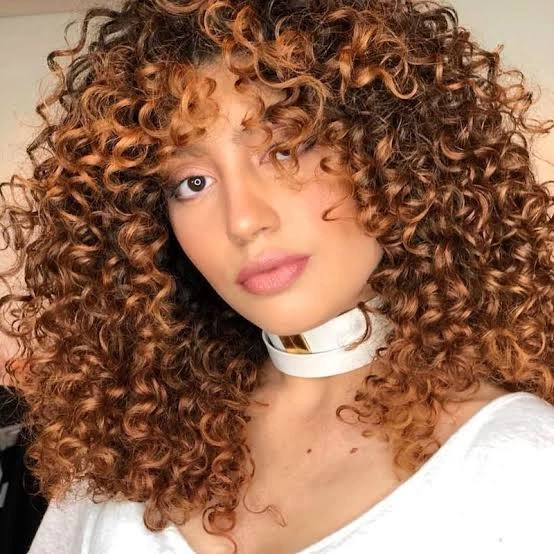
Going fully caramel, rather than just highlighting, gives curls a warm, honeyed glow from root to end. This works particularly well on curl types with lower density, since the lighter tone can add the illusion of extra fullness and dimension. Pair this shade with gold-toned jewelry and warm-toned makeup for a cohesive look. A tip worth remembering: all-over color needs more frequent deep conditioning, since lightening can strip curls of natural moisture and elasticity. From full caramel, let’s shift toward something richer and deeper.
4. Chocolate Brown Balayage
Chocolate balayage swaps caramel for a deeper, richer brown, painted in soft, blended streaks through dark curls. This creates dimension without the commitment of going lighter, which makes it a great choice if you want subtle change rather than a dramatic one. It suits cooler skin tones particularly well and reads as polished and professional. A helpful tip: ask your colorist to concentrate the balayage slightly heavier at the crown, since curls at the top of the head catch the most natural light. Let’s move next to a technique that blends two tones seamlessly.
5. Caramel and Dark Brown Ombré

Ombré creates a gradual shift from dark brown roots into caramel ends, and on curly hair, this transition looks especially soft because curls naturally blur hard lines as they coil. This is a lower-maintenance option since regrowth blends rather than creating a visible root line. It works on nearly every face shape and suits long to extra-long curls best, where there’s enough length to show the gradient clearly. A tip to try: request a “root smudge” technique so the transition point looks smoky rather than sharply divided. Now, let’s talk about a technique built specifically for depth rather than lightness.
6. Multi-Tonal Dark Brown (Shadow Root Technique)
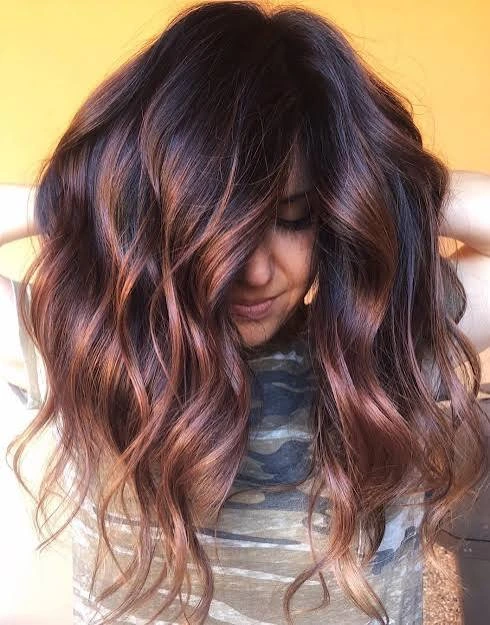
Even without lightening, dark brown curls can get gorgeous dimension using two or three shades of brown applied in a shadow-root pattern. The darkest tone stays at the root, gradually shifting into lighter chocolate or espresso tones through the length. This creates depth that photographs beautifully and adds richness without any bleach involved. It flatters every skin tone since brown-on-brown avoids any harsh contrast. A practical tip: this technique is gentle enough to do more frequently than lightening services, roughly every eight to ten weeks. Next, let’s look at a version designed for curls that want more contrast and drama.
7. Caramel Highlights With Face-Framing Contrast
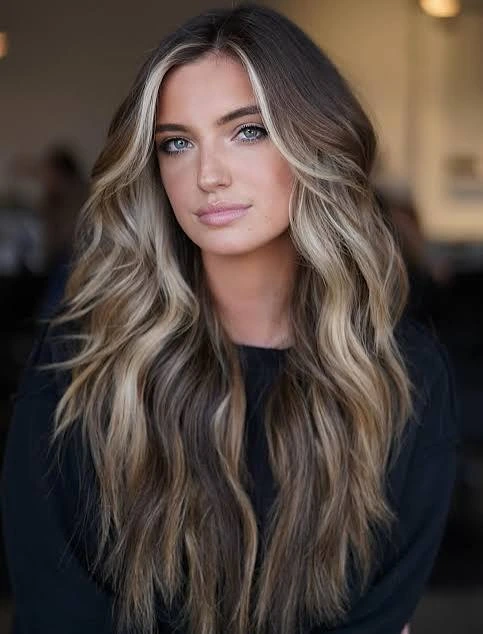
This technique combines a warm caramel base with a few noticeably bolder highlights placed strategically around the face. The contrast draws attention upward toward the eyes and cheekbones, which works beautifully with curl patterns that already frame the face naturally. It’s a striking option for special occasions but versatile enough for daily wear too. A tip that helps: ask for highlights placed in a “V” pattern rather than straight across, since curls spiral and a V-shape tends to follow that natural movement better. From bold contrast, let’s move to something more understated.
8. Soft Caramel Roots With Dark Brown Ends (Reverse Balayage)
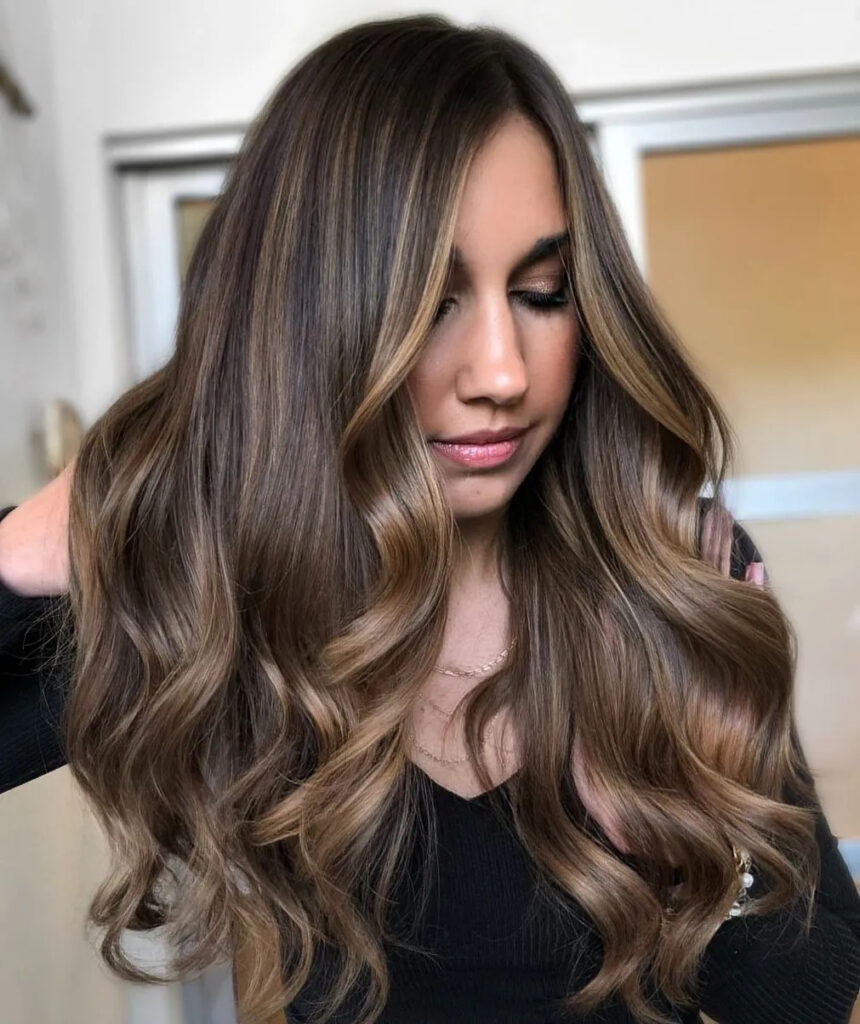
Reverse balayage flips the usual placement, putting caramel near the roots and letting hair deepen into dark brown toward the ends. This is a clever option if you’re growing out a previous lightening service, since it uses your natural darker ends as part of the design instead of fighting against them. It suits shorter curly cuts particularly well, where there’s less length for a traditional ombré to show off. A helpful tip: this technique works best with a colorist experienced in curl-specific cutting, since the color placement should follow how curls actually fall. Let’s shift now toward color designed for maximum shine.
9. Glossy Dark Brown With Caramel Undertones
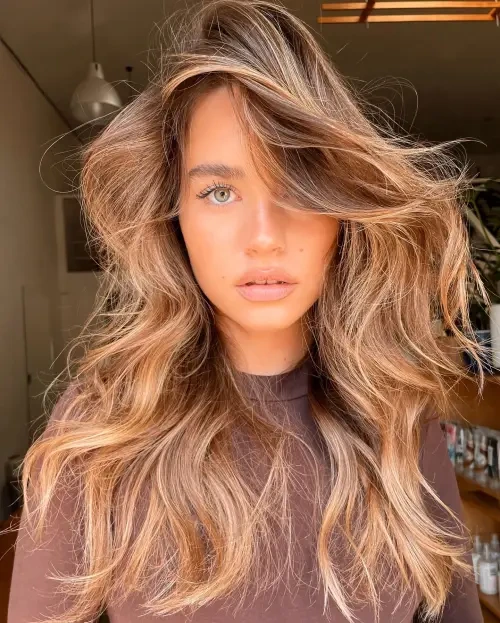
A glaze or gloss treatment over dark brown curls, formulated with subtle caramel undertones, boosts shine dramatically without changing your base color much at all. This is one of the lowest-commitment options on this list, since glosses fade gently over several weeks rather than growing out visibly. It works on every curl type and suits anyone wanting a “healthy hair” look rather than an obvious color change. A tip worth trying: schedule a gloss refresh every four to six weeks to keep curls looking consistently vibrant. Next, let’s cover a technique built around curl definition itself.
10. Curl-Defining Caramel Ribbons
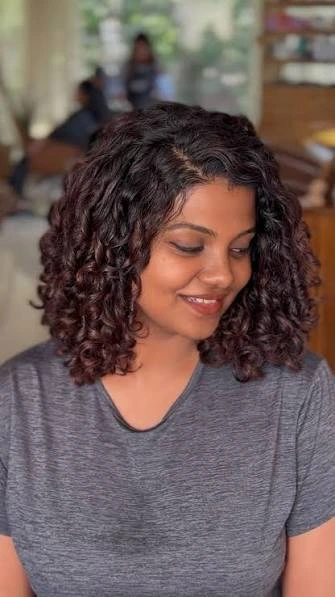
This technique places caramel color in thin, ribbon-like sections that wrap along the natural curl pattern rather than being painted in flat panels. The result is color that seems to spiral through each curl, emphasizing definition and bounce. It’s especially striking on tighter curl patterns where individual coils are easy to trace visually. A practical tip: this technique requires a colorist to section hair while curls are in their natural, unstretched state, so book an appointment on a day you haven’t recently straightened. Now, let’s look at an option perfect for lower-maintenance lifestyles.
11. Caramel Root Melt

A root melt blends caramel color gently into the natural root color, avoiding any hard line at all. Unlike traditional highlights, the color transition starts right at the scalp and softens outward, which means regrowth is almost invisible for months. This works wonderfully for busy schedules and suits nearly every curl type and length. A tip that matters here: ask specifically for “low-lift” formulas near the root, since these process more gently and reduce scalp irritation risk. From subtlety, let’s move into a bolder, more dramatic direction.
12. Bold Caramel Curls With Copper Undertones

Adding warm copper undertones to a caramel base creates a fiery, sun-drenched effect that looks incredible in natural light. This combination works particularly well on curls with red or auburn undertones already present, since the copper enhances rather than fights the hair’s natural pigment. It’s a head-turning option for warm skin tones and pairs beautifully with bronze or gold makeup. A helpful tip: request a color consultation using a swatch under natural daylight, not salon lighting, since copper tones shift dramatically under different light sources. Next, let’s discuss a technique built for subtle, everyday elegance.
13. Dark Brown Base With Caramel Peekaboo Highlights
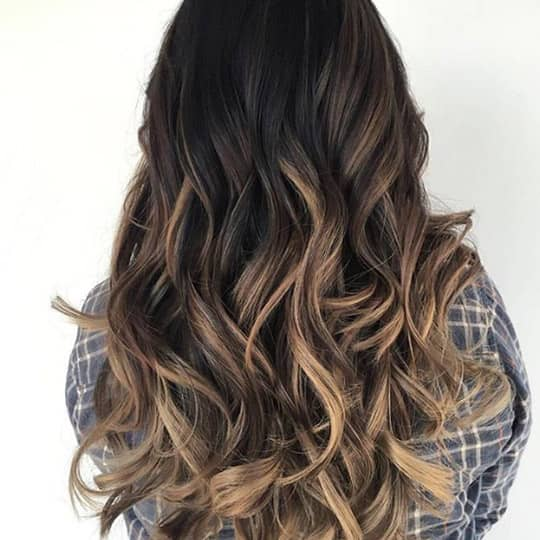
Peekaboo highlights hide underneath the top layer of curls, revealing caramel color only when hair moves or gets tucked behind an ear. This is a fun, playful option for anyone who wants a hint of color without full commitment. It suits shorter to medium curls especially well, since the peekaboo effect shows more easily with less length to hide it. A tip worth trying: ask for the highlights placed slightly higher than typical peekaboo placement, since curls shift position more than straight hair as they dry and settle. Let’s transition now to color built around low upkeep.
14. Espresso Brown With Subtle Caramel Glaze
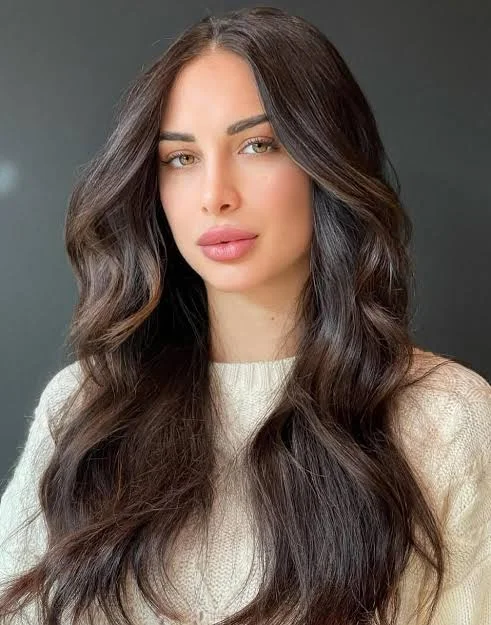
Espresso brown is deeper and slightly cooler than standard dark brown, and a light caramel glaze over the top warms it up just enough to avoid looking flat. This combination is a great pick for anyone wanting richness and depth without ever touching bleach. It flatters cooler and neutral skin tones and works on every curl pattern. A practical tip: pair this color with a weekly hair mask, since glazes work best on well-moisturized hair that can hold onto shine. Finally, let’s close with a color idea built entirely around dimension rather than a specific shade.
15. Dimensional Brunette Curls (Multiple Caramel Tones Blended)
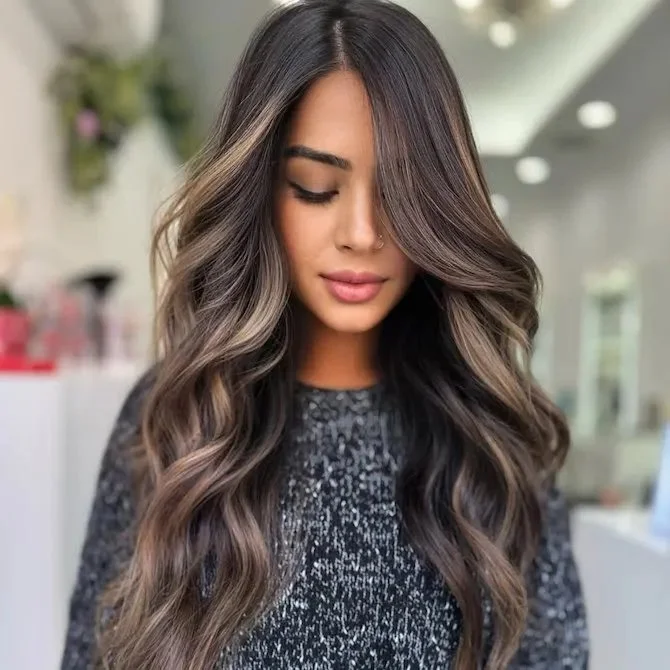
Rather than choosing one caramel shade, this technique blends two or three different caramel tones throughout dark brown curls, creating a rich, multidimensional finish. Because curls twist in every direction, having multiple tones means light catches something slightly different at every angle. This works on literally every curl type and length, making it one of the most universally flattering options on this list. A tip to remember: this technique takes longer in the chair, so book extra time and expect a higher cost than single-tone coloring.
Curly Hair Color Comparison at a Glance
Maintenance Level and Best Use Case by Technique
| Color Technique | Maintenance Level | Best For | Typical Touch-Up Window |
|---|---|---|---|
| Caramel Balayage | Low | Growing out gracefully | 10–14 weeks |
| Money Piece Highlights | Low | Face-framing brightness | 8–12 weeks |
| All-Over Caramel | High | Bold, full color change | 6–8 weeks |
| Chocolate Balayage | Low | Subtle depth | 10–14 weeks |
| Caramel-Brown Ombré | Very Low | Long curls, minimal upkeep | 12–16 weeks |
| Shadow Root (Dark Brown) | Low | No-bleach dimension | 8–10 weeks |
| Face-Framing Contrast | Medium | Special occasions | 8–10 weeks |
| Reverse Balayage | Medium | Growing out old color | 10–12 weeks |
| Gloss With Caramel Tones | Very Low | Shine without commitment | 4–6 weeks |
| Curl-Defining Ribbons | Medium | Emphasizing curl pattern | 8–10 weeks |
| Root Melt | Very Low | Busy schedules | 12–16 weeks |
| Copper-Caramel Blend | Medium | Warm skin tones, bold looks | 8–10 weeks |
| Peekaboo Highlights | Low | Playful, hidden color | 10–12 weeks |
| Espresso With Glaze | Low | Cool tones, subtle warmth | 4–6 weeks (glaze), 12+ (base) |
| Dimensional Brunette | Medium | Universal flattery | 10–12 weeks |
Common Mistakes and How to Avoid Them
Ignoring porosity : Curly hair is often more porous than straight hair, which means it can absorb and fade color faster. Ask your colorist to adjust processing time and formula strength accordingly.
Coloring hair while stretched : Applying color to curls that have been blown out or straightened can lead to uneven placement once curls spring back. Get color done while hair is in its natural curl state whenever possible.
Skipping a strand test : Lightening curly hair without a strand test risks unexpected brassiness or damage, especially on previously colored hair. Always request a test strand before a full lightening service.
Using sulfate shampoo right after coloring : Sulfates strip color quickly, which is especially frustrating on curls that already fade faster. Switch to a sulfate-free, color-safe shampoo immediately after your appointment.
Over-lightening in one session : Trying to go from dark brown to light caramel in a single visit can cause serious breakage on curly strands. A gradual, multi-session approach protects curl integrity far better.
Neglecting protein treatments : Color processing weakens the hair’s protein structure, and skipping protein treatments afterward leaves curls prone to snapping. Add a protein treatment to your routine every few weeks post-color.
Similar Variations Worth Trying
- Cinnamon-toned balayage: a slightly redder alternative to classic caramel, flattering on deeper skin tones.
- Honey blonde peekaboo: a lighter twist on the peekaboo technique for those wanting more brightness.
- Cool-toned ash brown highlights: a variation for anyone wanting dimension without warmth.
- Bronde curls (blonde-brown blend): a softer, lower-maintenance take on all-over caramel.
- Burgundy-brown balayage: a jewel-toned alternative for cooler months and deeper skin tones.
Hair Care Tips for Curly Hair Color Ideas: Highlights, Caramel Curls, and Dark Brown
- Use a color-safe, sulfate-free shampoo and conditioner to slow fading between appointments.
- Deep condition weekly, since lightened or highlighted curls lose moisture faster than untouched hair.
- Apply a leave-in with UV protection, since sun exposure fades warm tones like caramel especially quickly.
- Detangle gently with a wide-tooth comb or fingers, since colored curls are more prone to breakage.
- Rinse with cool water instead of hot, since heat opens the hair cuticle and accelerates color loss.
- Schedule regular gloss or toner refreshes to keep caramel and brown tones from turning dull or brassy.
Final Thoughts
Picking from these curly hair color ideas really comes down to how much upkeep you want and how bold a change you’re after, whether that’s subtle chocolate balayage or full, vibrant caramel curls. Every technique here was chosen because it works with curl movement instead of against it, so the color actually enhances your natural texture rather than flattening it.
Bring a few reference photos to your appointment and talk openly with your colorist about your curl pattern and porosity, since that conversation makes all the difference in the final result. Whichever direction you choose, these curly hair color ideas prove that caramel curls and dark brown tones can look just as stunning, if not more so, on natural texture as they do on straight hair.